
Clouding of the natural lens
Cataract
A usually gradual change that may affect reading, night driving, contrast and overall day-to-day function.
Course
Usually gradual
Symptoms
Blurring & glare
Decision
Guided by daily needs
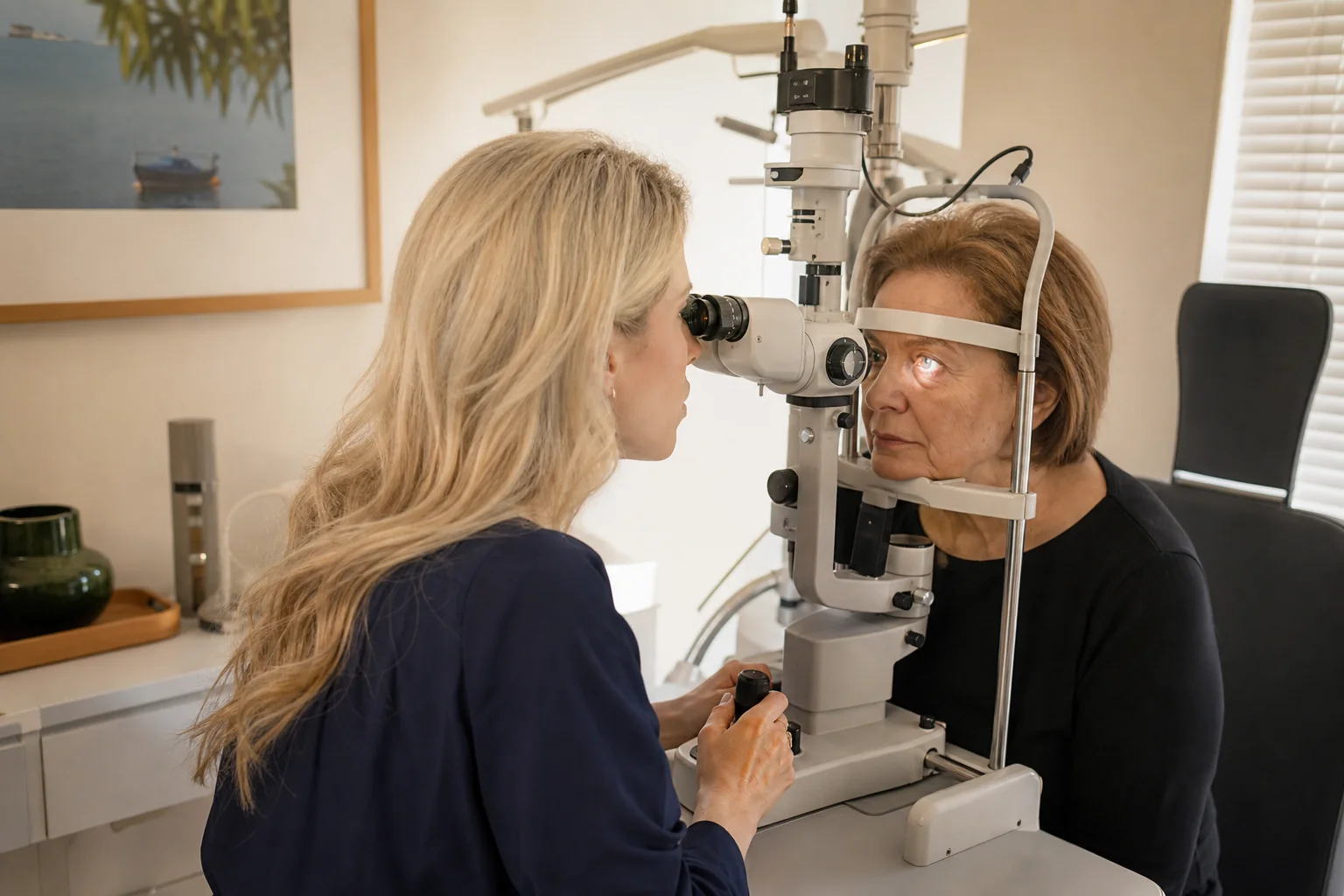
Lens assessment
Cataract
What is a cataract?
The natural lens gradually becomes less transparent.
A cataract is clouding of the natural lens of the eye and becomes more common with age.
It may also be associated with trauma, diabetes, previous eye surgery or the long-term use of certain medicines.
Progression is usually gradual, and its effect varies according to each person’s needs for reading, driving and everyday activities.
The decision to have surgery is not based on a visual acuity number alone. Symptoms, day-to-day needs and the overall health of the eye are considered together.
How vision is affected
Image quality changes at several levels.
This page explains the condition. The procedure, intraocular lens and post-operative care are covered separately on the Cataract Surgery page.
01 / CLARITY
Cloudy vision
Blurred Vision
Vision may appear hazy, as though viewed through mist or a dirty window.
- Gradual change
- Difference between the eyes
- Effect on reading
02 / LIGHT
Glare and haloes
Discomfort from Bright Lights
Headlights and bright lights may become more difficult, particularly at night.
- Glare
- Haloes
- Difficulty driving at night
03 / CONTRAST
A less vivid image
Colour & Contrast
Colours may appear more faded or yellowed and contrast may be reduced.
- Altered colour perception
- Need for more light
- Difficulty with low contrast
04 / REFRACTION
Changing prescription
Frequent Changes in Glasses
The prescription may change more often without providing consistently clear vision.
- Refraction assessment
- Lens assessment
- Comprehensive eye assessment
Symptoms
When vision makes familiar tasks more difficult.
The effect on everyday function is more important than any single measurement.
Do headlights make night driving difficult?
Glare and haloes are common symptoms that are worth assessing.
01
Blurred or cloudy vision
A gradual loss of clarity.
02
Reduced contrast
Difficulty distinguishing subtle differences in brightness.
03
Faded colours
Colours may appear less vivid or more yellowed.
04
Difficulty at night
More discomfort in low light and when driving.
05
Haloes
Rings or scattered light around bright sources.
06
Frequent changes in glasses
Prescription changes without consistent improvement.
Is the blurring sudden or accompanied by pain? Cataract usually progresses gradually. A sudden change requires prompt assessment for another possible cause.
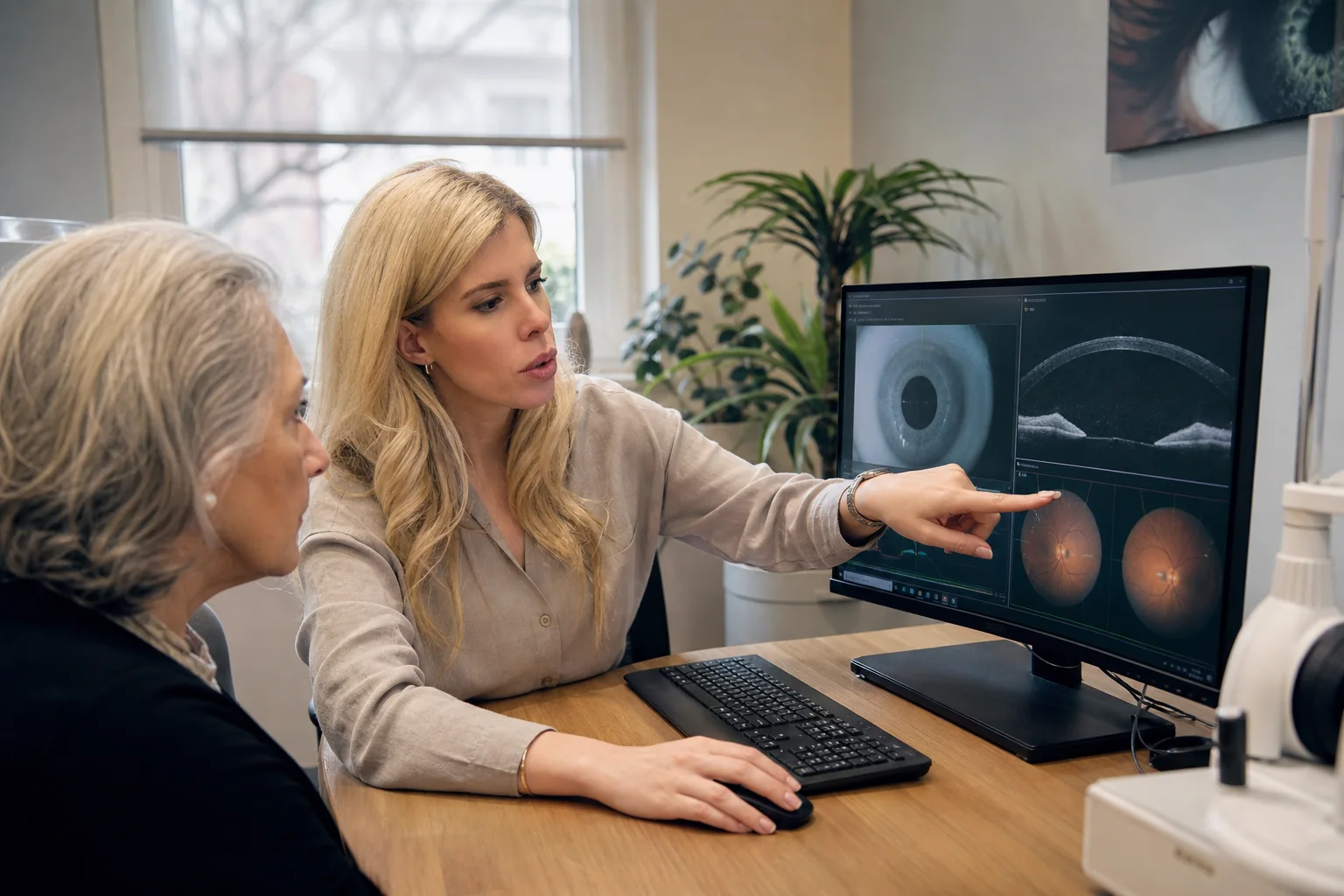
Comprehensive assessment
Lens & posterior segment
Diagnosis & follow-up
The assessment considers not only the lens, but the whole eye.
The retina, macula and optic nerve are also assessed so that expectations from possible surgery are realistic.
01
Visual acuity
Measurement of the functional effect on vision.
02
Slit-lamp examination
Detailed examination of the natural lens and its clouding.
03
Refraction
Assessment of whether a change in glasses can still improve vision.
04
Fundus examination
Assessment of the retina, macula and optic nerve.
05
Additional imaging
OCT or another test when required by the findings.
Management
The appropriate timing is determined by day-to-day function.
In the early stages, a change in glasses or improved lighting may help temporarily. When everyday life is substantially affected, surgery may be considered.
01
Monitoring
For mild symptoms that do not substantially limit everyday activities.
02
Improved lighting
Practical support in the early stages, according to individual needs.
03
Change in glasses
May provide temporary improvement when refraction has changed.
04
Cataract surgery
Removal of the cloudy natural lens and replacement with an intraocular lens when clinically indicated.
This page covers the condition. Pre-operative assessment, intraocular lens selection, the procedure and post-operative care are described on the Cataract Surgery page.
Frequently asked questions
Helpful answers.
General information that does not replace an individual medical assessment.
Is surgery required as soon as cataract is diagnosed?
Not necessarily. Timing depends on the effect on vision and everyday activities, as well as the overall examination findings.
Can a cataract return after surgery?
The natural lens does not grow back. Later, the thin capsule behind the intraocular lens may become cloudy and may require YAG laser treatment when clinically indicated.
Will I need glasses after surgery?
This depends on the type of intraocular lens, the anatomy of the eye, astigmatism and other factors. Absolute promises of independence from glasses cannot be made.
Specialist assessment
Has your vision become cloudy, or do you find night-time vision more difficult?
Arrange a comprehensive cataract assessment and discuss the options in the context of your individual needs.
or call +30 697 421 2356
Medical information notice
This content is provided for general information and does not replace an ophthalmic examination, diagnosis or personalised medical advice.