
Targeted retinal treatment
Retinal Laser Treatment
Controlled laser applications to specific areas of the retina, with a treatment goal determined by the precise diagnosis.
Application
Targeted
Aim
Indication-led
Decision
After examination
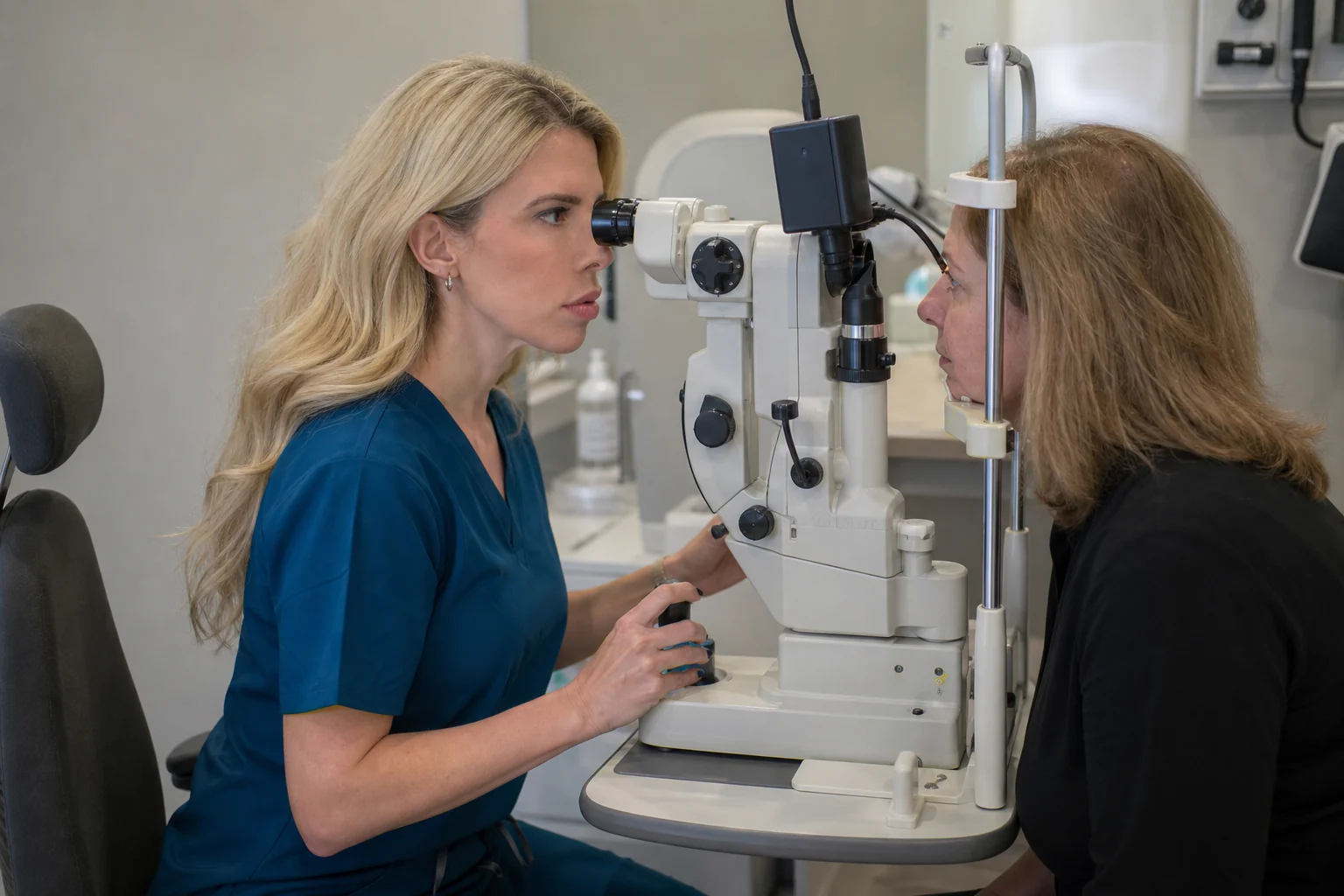
Detailed planning
Retina
The laser
Each application serves a defined treatment goal.
Retinal laser is used in selected conditions to deliver controlled treatment to specific retinal areas.
The aim may be to surround a retinal tear, treat ischaemic areas or provide another targeted therapeutic intervention.
Not every retinal condition is suitable for laser. The decision is based on detailed examination and imaging findings.
Laser does not generally “strengthen” the retina and does not always restore vision that has already been lost.
Possible indications
The indication reflects the finding and its risk.
The location, extent and type of lesion determine whether laser may offer a benefit.
01
Retinal tears or holes
Selected findings that may require a surrounding laser barrier.
02
Peripheral retinal lesions
Certain higher-risk changes after detailed assessment.
03
Diabetic retinopathy
Proliferative disease or other established indications.
04
Retinal ischaemia
Changes following vascular occlusion in selected cases.
05
Focal leakage
Specific vascular leakage where there is a clinical indication.
The procedure
From detailed examination to precise application.
Planning comes before treatment and sets out the goal, expected benefits and limitations clearly.
01
Dilation & fundus examination
Assessment of the fundus and peripheral retina.
02
Imaging
OCT, photography or angiographic imaging when indicated.
03
Laser application
Using drops, possible local anaesthetic and often a specialised contact lens.
04
Follow-up
Assessment of the treated area and overall clinical course.
Bright flashes may be visible and mild discomfort may occur during treatment. Duration depends on the extent and type of treatment.
Outcomes & limitations
The expected result depends on the treatment goal.
Laser may reduce specific risks or treat selected lesions. More than one session or additional treatment may be required.
01
Surrounding a tearThe aim is to create an adhesive barrier around the lesion.
02
Vascular conditionsThe aim and technique vary according to ischaemia or leakage.
03
Prevention or stabilisationThe expected outcome is not always an immediate improvement in vision.
Focused energy
Precise applications, with a different aim for each diagnosis.
Effectiveness is judged in relation to the lesion, timing and the overall condition of the retina.
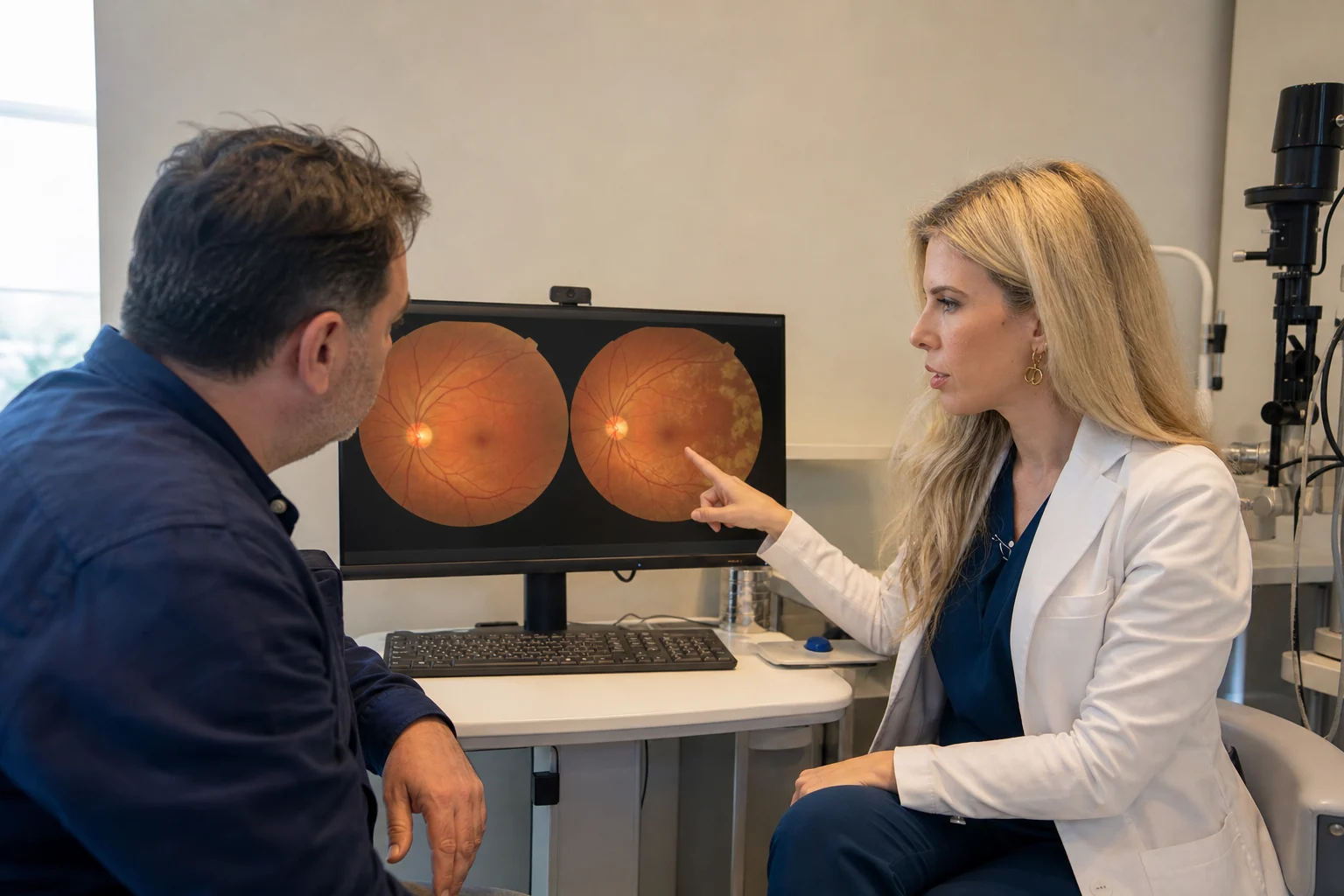
Outcome assessment
Targeted follow-up
After treatment
Follow-up completes the treatment.
Vision may be temporarily blurred because of dilation or the bright laser pulses. The ophthalmologist provides advice on activities, medication and follow-up.
01
Temporary blur
Dilation and bright pulses may temporarily affect vision.
02
Advice
Activities and medication are determined individually.
03
Follow-up
The treated area and any new findings are reviewed as planned.
Contact the practice promptly if you notice a new shadow, many new floaters, a significant reduction in vision or severe pain.
Treatment limitations
Laser is not the same as surgical repair.
Laser may be used for selected tears before detachment develops or in specific limited situations. An established retinal detachment often requires surgical assessment.
Many laser procedures are performed on an outpatient basis, but the setting and protocol depend on the indication.
Frequently asked questions
Helpful answers.
Key points about the aims and limitations of retinal laser treatment.
Does laser repair a retinal detachment?
Laser may be used for selected tears before detachment develops or in specific limited situations. An established retinal detachment often requires surgical assessment.
Is hospital admission required?
Many laser procedures are performed on an outpatient basis, but the setting and protocol depend on the indication.
Will my vision improve immediately?
The aim is often preventive or stabilising rather than immediate visual improvement. The expected outcome is explained for the individual case.
Detailed assessment
Has a retinal tear or another lesion been identified?
Suitability for laser is determined after a detailed retinal examination.
or call 697 421 2356
Medical information notice
This content provides general information and does not replace a retinal examination or an individual treatment decision.