
Cornea, tears & eyelids
Ocular Surface & Eyelid Conditions
Conditions that may cause dryness, burning, redness, watering, discharge or intermittent blurring — with a different cause and management in each case.
Symptoms
Dryness & stinging
Structures
Cornea & eyelids
Assessment
Tear film
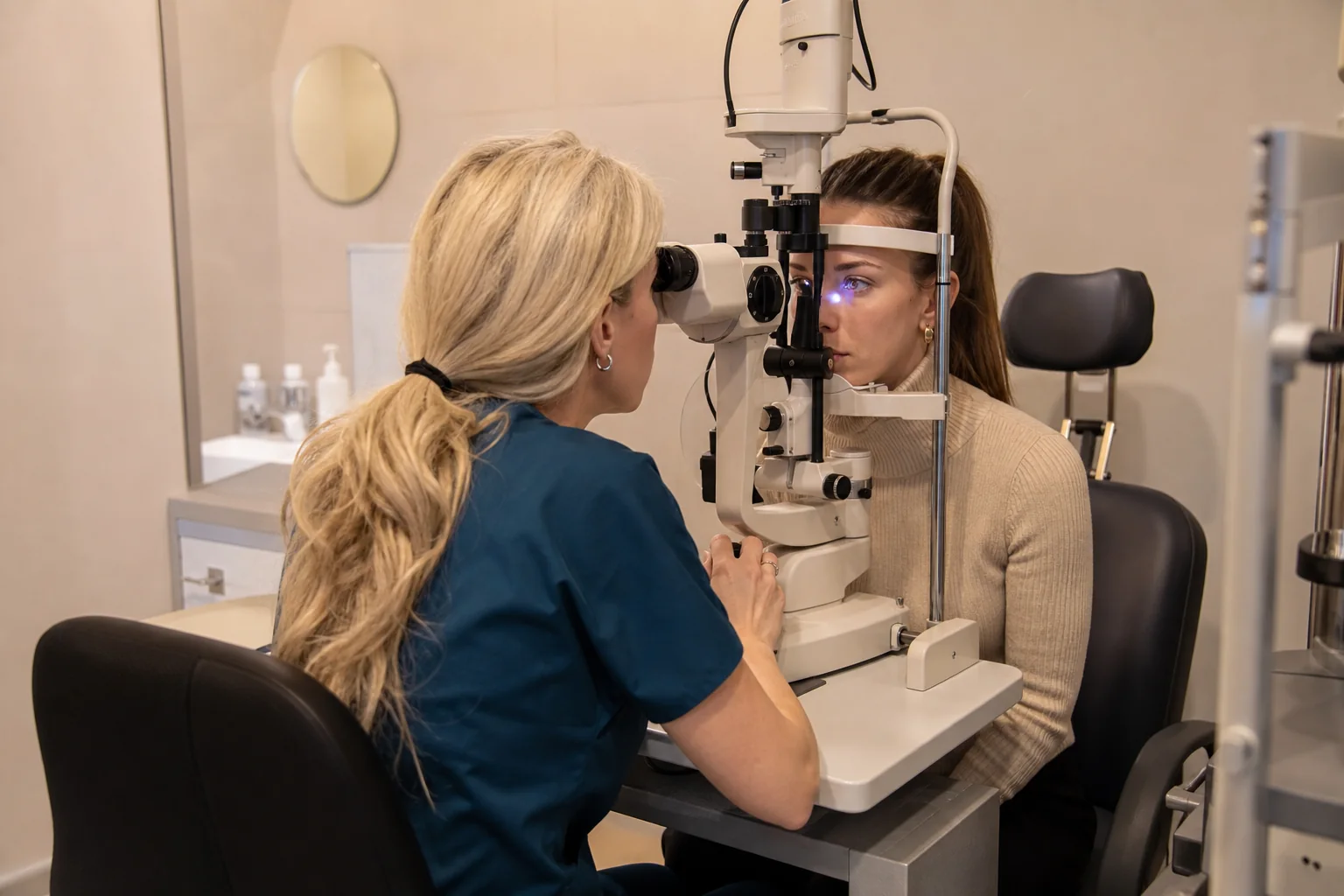
Surface of the eye
Tears & eyelids
The first line of protection
A balance between the tears, the ocular surface and the eyelids.
The ocular surface includes the cornea, conjunctiva and tear film, while the eyelids protect and lubricate the eye.
Disorders affecting these areas may cause dryness, stinging, a foreign-body sensation, redness, watering, discharge, itching or intermittent blurred vision.
Similar symptoms may have different causes. Examination distinguishes dry eye, inflammation, infection and eyelid disease.
Antibiotic eye drops are not a general treatment for every red eye. Management depends on the cause.
Conditions covered
From the tear film to the meibomian glands.
The clinical appearance and duration of symptoms guide the diagnosis and personalised care plan.
01 / TEARS
Quality and stability
Dry Eye
It may cause burning, a gritty sensation, watering and fluctuations in the clarity of vision.
- Tear-film assessment
- Assessment of the meibomian glands
- Environmental and systemic factors
02 / CONJUNCTIVA
Several possible causes
Conjunctivitis
It may be caused by viruses, bacteria, allergy or irritants.
- Redness and watering
- Discharge or itching
- Treatment according to the cause
03 / TISSUE GROWTH
From the conjunctiva towards the cornea
Pterygium
A benign growth of tissue that may cause irritation or alter the shape of the cornea.
- Assessment of its extent
- Corneal assessment
- Monitoring of vision
04 / EYELID MARGINS
Chronic or recurrent course
Blepharitis
It may cause redness, itching, crusting of the eyelashes and a dry or burning sensation.
- Common gland dysfunction
- Association with dry eye
- Personalised eyelid care
05 / LUMP
Blocked meibomian gland
Chalazion
A cyst or eyelid lump that may be tender at first and later become painless.
- Assessment of persistent lesions
- Evaluation of atypical features
- Review for recurrence
Symptoms
Similar discomfort, but not always the same cause.
Duration, the side affected, discharge, pain and the effect on vision help with the differential diagnosis.
Is a red eye accompanied by pain or photophobia?
Do not automatically assume that it is simple conjunctivitis or dry eye.
01
Dryness or burning
Discomfort that may worsen with screen use or in a dry environment.
02
Foreign-body sensation
A gritty or scratchy sensation on the surface.
03
Redness
May be caused by different inflammatory or irritative conditions.
04
Watering or discharge
The character of the discharge helps guide clinical assessment.
05
Itching or crusting
Often associated with allergy or blepharitis.
06
Intermittent blurring
May temporarily improve after blinking.
Severe pain, significant photophobia or a noticeable reduction in vision? These symptoms should not automatically be attributed to simple conjunctivitis or dry eye and require prompt assessment.
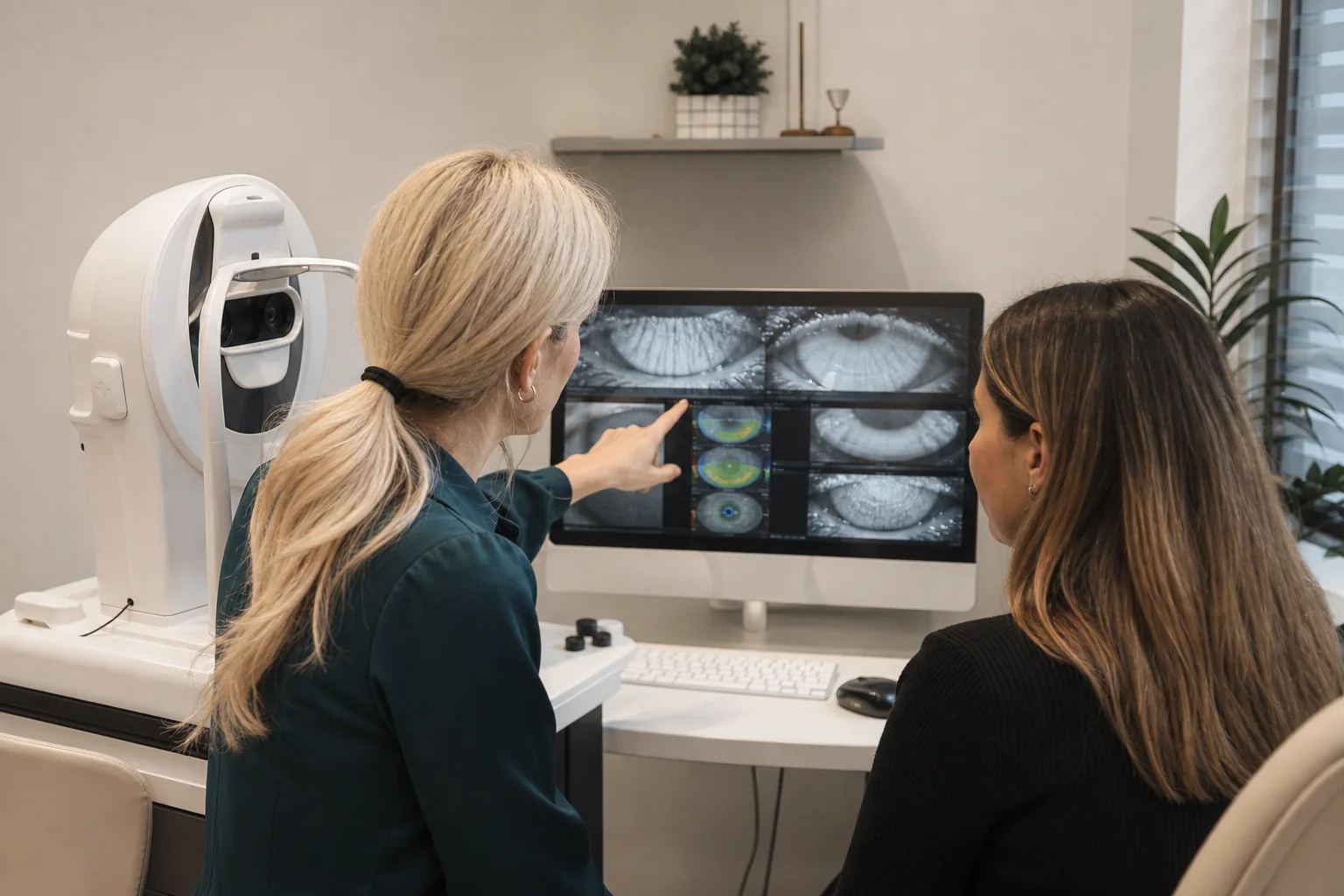
Detailed examination
Ocular surface & eyelids
Diagnosis & follow-up
Examination identifies the cause behind the discomfort.
The cornea, conjunctiva, tear film, eyelids and meibomian glands are assessed together.
01
Slit-lamp examination
Detailed examination of the ocular surface.
02
Cornea & conjunctiva
Assessment of integrity, inflammation and any lesions.
03
Tear film
Assessment of tear quantity, quality and stability.
04
Eyelids & glands
Assessment of the eyelid margins and meibomian gland function.
05
Specific measurements
Performed only when required by the clinical findings.
Management
Personalised care, not general self-treatment.
Management may include local treatment, lubricants, eyelid care, treatment of the cause or a minor procedure when indicated.
01
Lubricant support
May form part of the plan according to the type of dry eye.
02
Eyelid care
Personalised when blepharitis or gland dysfunction is present.
03
Targeted local treatment
Selected according to the cause — not as a general solution for every red eye.
04
Minor surgical procedure
Considered for specific lesions or persistent findings.
Commercial preparations and self-treatment instructions are not recommended without clinical examination. Inappropriate treatment may delay the correct diagnosis.
Frequently asked questions
Helpful answers.
General information that does not replace an individual medical assessment.
Why do the eyes water when dry eye is present?
An unstable tear film may trigger reflex watering even though the ocular surface remains inadequately protected.
Does every red eye need an antibiotic?
No. Redness may have a viral, allergic, inflammatory or another cause. Treatment depends on the diagnosis.
When does a chalazion need assessment?
When it persists, has atypical features or recurs, ophthalmic assessment is required.
Specialist assessment
Persistent redness, dryness or discomfort in your eyes?
Arrange an ocular-surface and eyelid assessment for a personalised diagnosis and care plan.
or call +30 697 421 2356
Medical information notice
This content is provided for general information and does not replace an ophthalmic examination, diagnosis or personalised medical advice.