
Comprehensive vision assessment
The foundation of lifelong eye health.
A personalised assessment of vision and ocular structures for adults and children.
Approach
Personalised
Suitable for
Adults & children
Aim
Prevention & diagnosis
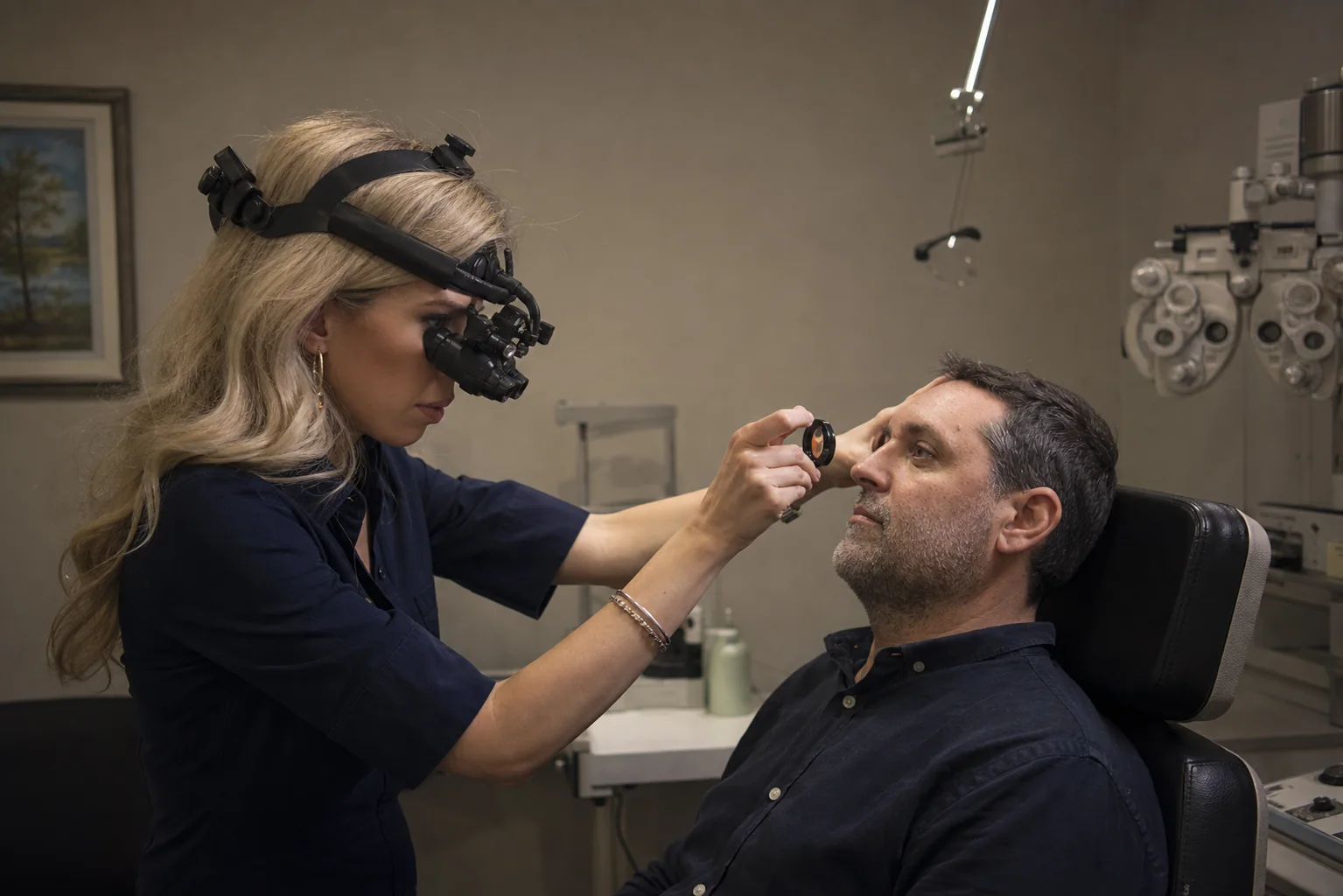
Eye examinations
Comprehensive examination
Comprehensive assessment
More than a simple vision check.
A comprehensive eye examination combines assessments tailored to each patient’s age, symptoms and medical history.
Its aim is the timely identification of refractive errors, conditions affecting the front or back of the eye and changes that may initially cause no symptoms.
The precise scope of the examination is not the same for everyone; it is determined after taking a medical history and completing the clinical assessment.
Pupil dilation and additional imaging are performed only when clinically indicated.
What it may include
Assessment of function and anatomy.
The doctor selects the appropriate individual stages according to the clinical question.
01 / VISION
Functional assessment
Visual function
Assessment of visual clarity, focusing and how the eyes work together.
- Visual acuity
- Refractive errors
- Eye movements & coordination
- Near and distance vision
02 / EYE HEALTH
Clinical assessment
Ocular structures
Examination of the anterior and posterior segments using the appropriate techniques.
- Slit-lamp examination
- Intraocular pressure
- Retina
- Optic nerve
The process
An examination tailored to you.
The order and extent of the assessments are guided by the findings.
01
Medical history
Discussion of symptoms, previous examinations, medication and family history.
02
Vision assessment
Visual acuity and refraction assessment according to individual needs.
03
Clinical examination
Assessment of the ocular structures and pressure measurement when indicated.
04
Plan
Explanation of the findings and a plan for follow-up or additional assessment.
What to bring
Your glasses or contact lenses, previous prescriptions and eye examination reports, a list of medications and information about past conditions or procedures.
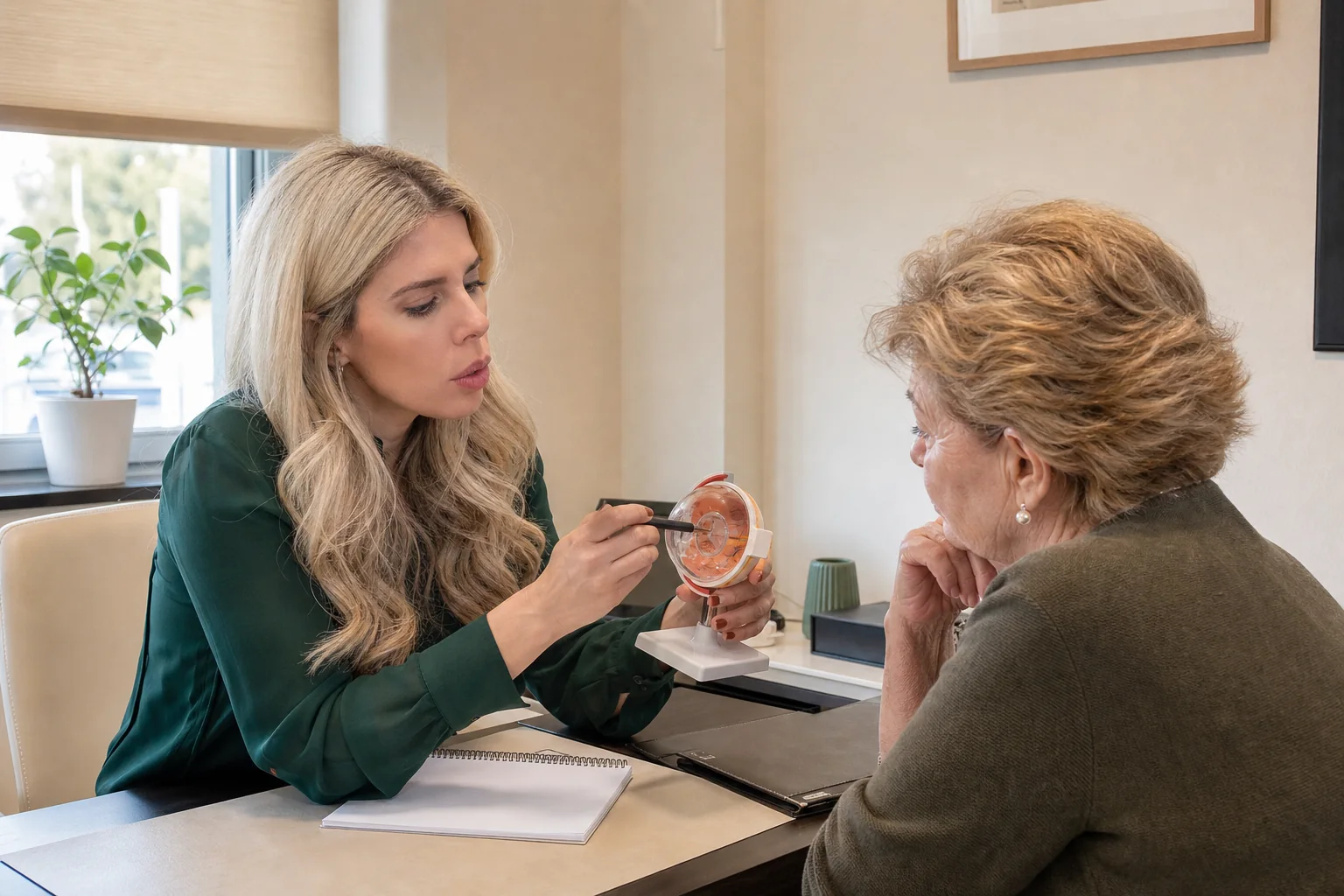
Personalised assessment
Clinical interpretation
Adults & children
Every age has different needs.
In adults, both visual quality and the anatomical structures are assessed. In children, the examination is adapted to their age and level of cooperation.
01
Preventive assessment
Looking for changes before they cause noticeable symptoms.
02
Symptoms
Assessment of blurred vision, eye strain, double vision, redness, flashes or new floaters.
03
Follow-up
Comparison of findings in a known condition or when risk factors are present.
If pupil dilation is used, near vision may be temporarily blurred and sensitivity to light may occur. The doctor will provide personalised guidance.
Frequently asked questions
Before your examination.
Concise answers about the process and how to prepare.
How long does the examination take?
The duration depends on age, symptoms and the individual assessments required. Pupil dilation or imaging may require additional time.
Will eye drops be needed?
Not in every case. The ophthalmologist decides whether pupil dilation is needed according to the purpose of the examination.
How often should I have an eye examination?
The recommended frequency is personalised according to age, medical history, risk factors and any known eye condition.
Preventive eye care
Protect your eye health.
Arrange a comprehensive eye examination for an adult or child.
or call +30 697 421 2356
Medical information notice
This content is provided for general information and does not replace an ophthalmic examination, diagnosis or personalised medical advice.