
Targeted macular & retinal treatment
Intravitreal Injections
Anti-VEGF medicines and corticosteroids, where indicated, deliver treatment close to the retina and macula.
Delivery
Targeted
Selection
Indication-led
Monitoring
Individualised

Imaging-led monitoring
Macula & retina
The treatment
Targeted delivery where treatment needs to act.
Intravitreal injections deliver medicine into the vitreous, close to the retina and macula.
They are used for selected conditions involving abnormal blood vessels, fluid leakage, swelling or inflammation.
The medicine, frequency and duration of treatment are tailored to the diagnosis and response.
This is not a treatment for every form of degeneration or every type of swelling. The indication is established after specialist assessment.
Possible indications
Treatment is selected for specific conditions.
The diagnosis and the activity of the condition determine whether treatment is indicated and which approach may be appropriate.
01
Neovascular macular degeneration
Abnormal blood vessels and leakage affecting central vision.
02
Diabetic macular oedema
Fluid accumulation at the macula in selected cases.
03
Retinal vein occlusion
Macular oedema following retinal vein occlusion.
04
Inflammatory conditions
Selected cases in which there is an established indication.
Treatment pathway
From imaging to follow-up.
The procedure itself is brief, but forms part of a complete plan of assessment and review.
01
Assessment beforehand
Vision, retina, macula and often OCT, together with history and previous treatment.
02
Antisepsis & anaesthesia
Strict antisepsis and local anaesthetic at the eye surface.
03
The injection
Medicine is delivered into the eye using a very fine needle.
04
Follow-up
Response is assessed clinically and with OCT when indicated.
The precise setting, protocol and timing reflect the ophthalmologist’s clinical practice and are adapted to the individual case.
Medicine & frequency
The plan follows the condition and its response.
There is no single schedule suitable for everyone. The medicine and need for further injections are reassessed at each review.
01
Anti-VEGFThese medicines limit the action of a factor involved in abnormal blood-vessel growth and fluid leakage.
02
CorticosteroidsUsed in selected inflammatory or oedematous conditions, with specific risks taken into account.
03
Individualised frequencySome conditions require repeated injections and OCT monitoring, rather than a universal monthly schedule.
Targeted action
Each injection is one part of a broader treatment strategy.
Depending on the condition, the aim may be stabilisation, reduction of fluid or improvement in vision.
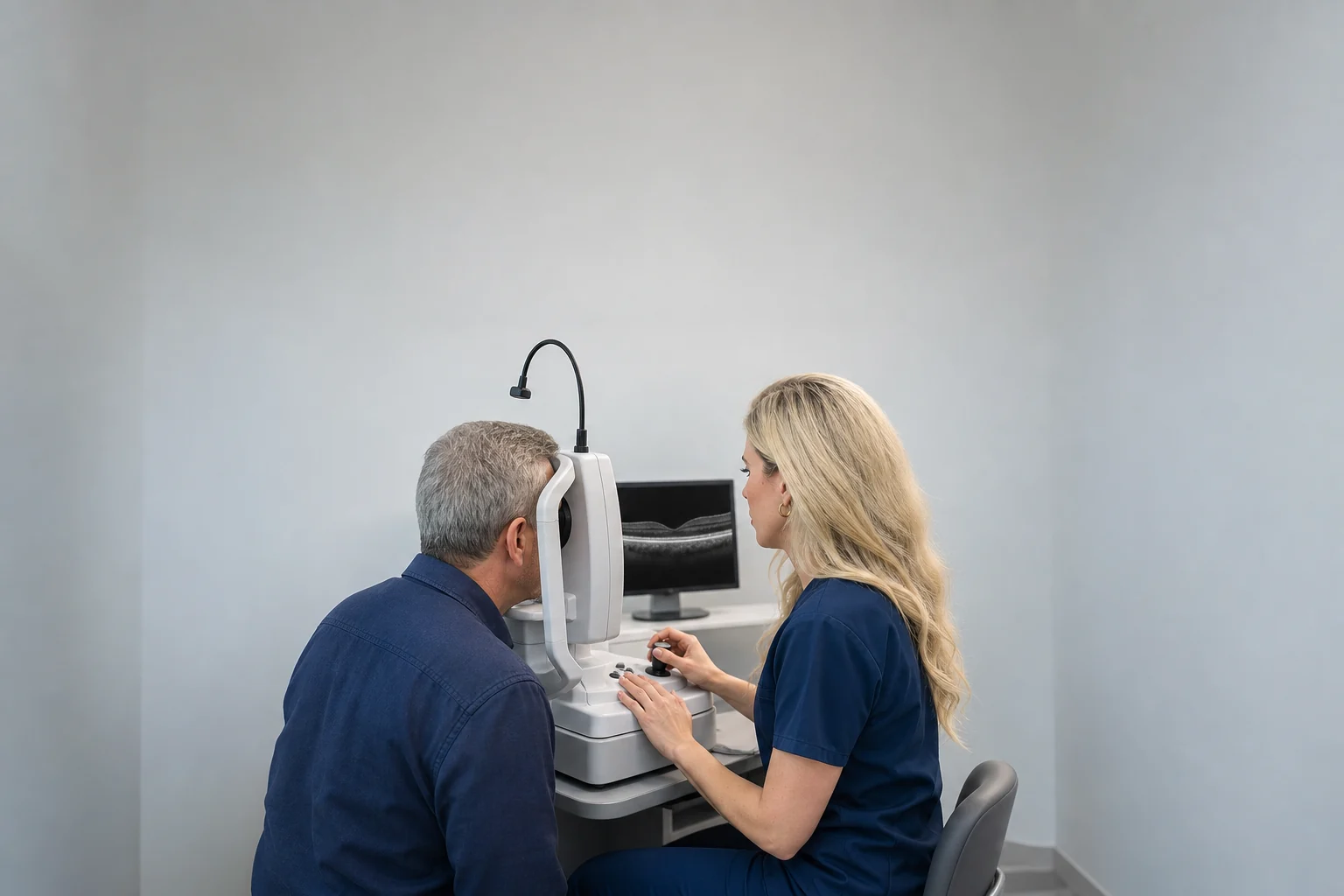
Comparative review
OCT & clinical findings
After the injection
The right advice supports the treatment pathway.
Temporary irritation, a foreign-body sensation, watering or small moving shadows may occur. Advice is tailored to the individual.
01
Temporary discomfort
Mild irritation or pressure may occur for a short time.
02
Monitoring
Vision, the macula and retinal fluid are assessed at scheduled reviews.
03
Further treatment
The need for another injection reflects the diagnosis and response.
Contact the practice promptly if you experience increasing pain, worsening vision, marked redness or another concerning symptom.
Safety after injection
Rarely, prompt assessment makes the difference.
Serious infection inside the eye is rare but requires urgent assessment. Patients receive clear advice about symptoms that should not wait.
When a corticosteroid is considered, possible risks such as increased intraocular pressure or effects on the lens are taken into account.
Frequently asked questions
Helpful answers.
Answers about the procedure and its individualised treatment frequency.
Is the injection painful?
Local anaesthetic is used to reduce discomfort. Most patients describe brief pressure or mild discomfort, although experiences vary.
Does it always improve vision?
The aim may be stabilisation, reduction of fluid or improvement in vision. The outcome depends on the condition, its duration and the state of the tissues.
Will I need several injections?
This depends on the diagnosis and response. The need for further treatment is assessed at each review.
Specialist assessment
Need treatment advice or a second assessment?
Arrange a specialist assessment of the macula and retina.
or call 697 421 2356
Medical information notice
This content provides general information and does not replace an individual diagnosis, medicine selection or the ophthalmologist’s advice.