
Inflammatory eye conditions
Uveitis & Scleritis
Inflammation that may affect different parts of the eye and requires targeted investigation rather than the same standard panel of tests for everyone.
Symptoms
Pain & photophobia
Extent
Anterior to posterior
Approach
Personalised
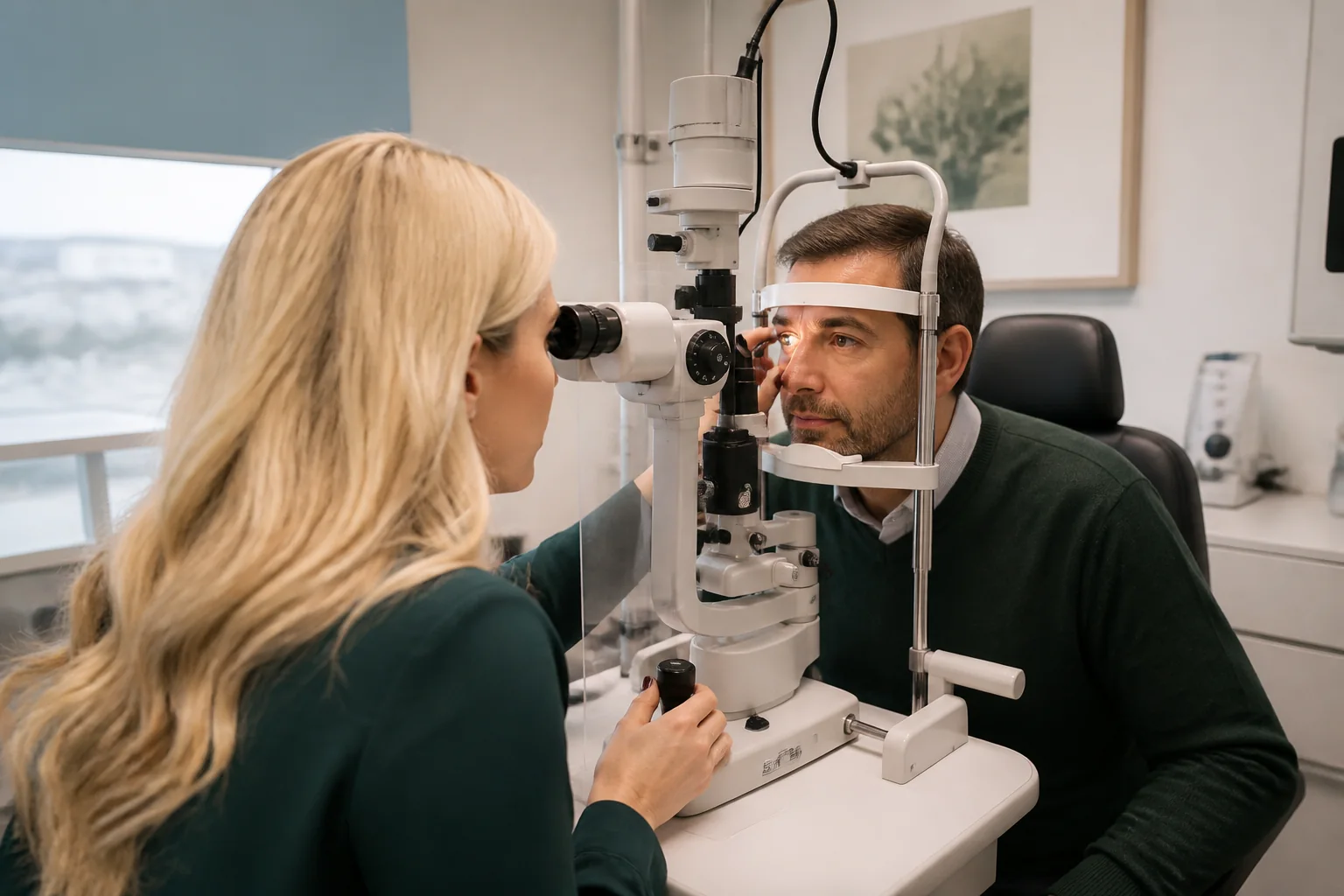
Targeted investigation
Ocular inflammation
Inflammation in different structures
Its location determines the presentation and the investigation.
Uveitis affects the uveal tract and, in many cases, neighbouring structures such as the vitreous, retina and optic nerve.
It may be associated with infections, autoimmune or other systemic disease, although in some cases no specific cause is identified.
Scleritis affects the sclera and is included in the same clinical group because of its marked inflammatory nature.
Investigation is targeted and personalised. There is no general laboratory “panel” that is mandatory for every patient.
Conditions covered
The location of inflammation changes the symptoms and findings.
Clinical classification helps guide investigation and follow-up.
01 / ANTERIOR
Front of the eye
Anterior Uveitis
It may cause pain, redness, photophobia and blurred vision.
- Slit-lamp examination
- Assessment of severity
- Monitoring for recurrence
02 / INTERMEDIATE
Vitreous and adjacent structures
Intermediate Uveitis
It commonly presents with floaters and gradually blurred vision.
- Vitreous assessment
- Fundus examination
- Targeted imaging
03 / POSTERIOR
Choroid and retina
Posterior Uveitis
It may cause floaters, blurring or distortion without marked pain or redness.
- Fundus examination
- OCT and imaging
- Assessment of the functional effect
04 / EXTENSIVE
Multiple parts of the eye
Panuveitis
It affects several or all parts of the uveal tract and requires comprehensive investigation.
- Close follow-up
- Targeted systemic investigation
- Multidisciplinary collaboration when required
05 / SCLERA
Deep or severe pain
Scleritis
Inflammation of the white outer coat of the eye, often with marked redness and tenderness.
- Assessment of severity
- Assessment for associated systemic disease
- Prompt evaluation
Symptoms
Pain, photophobia and blurred vision require prompt assessment.
The absence of marked redness does not rule out posterior inflammation.
Does light cause significant discomfort?
Photophobia with pain, redness or new blurring should not be ignored.
01
Pain or deep discomfort
It may be severe or progressively worsen.
02
Marked redness
Particularly when accompanied by pain or tenderness.
03
Photophobia
Sensitivity to light that requires prompt assessment.
04
Blurred or reduced vision
A new functional change that requires evaluation.
05
New floaters
More common with intermediate or posterior inflammation.
06
Recurrent episodes
Repeated inflammation that requires broader investigation.
Pain, photophobia, marked redness or new blurred vision? Prompt ophthalmic assessment is required.

Clinical examination
Targeted investigation
Diagnosis & follow-up
There is no single standard assessment for every inflammation.
The history, anatomical location and clinical findings guide further tests and collaboration with other specialists.
01
Detailed history
Medical, ophthalmic and systemic history.
02
Slit-lamp examination
Detailed examination of the anterior segment.
03
Dilated fundus examination
Assessment of the vitreous, retina and optic nerve.
04
OCT & fundus imaging
Anatomical documentation and follow-up of the findings.
05
Targeted investigation
Laboratory tests, angiography, ultrasound or other imaging only when clinically indicated.
06
Multidisciplinary collaboration
A rheumatologist, physician, infectious-disease specialist or another specialty when required.
Management
Treatment guided by the cause, location and severity.
The plan may include local or systemic treatment, management of an underlying cause and regular follow-up.
01
Local treatment
Used for selected inflammation according to the clinical findings.
02
Systemic treatment
May be required depending on the location, severity and cause.
03
Treatment of the cause
Targets an infectious, autoimmune or other underlying factor when identified.
04
Close follow-up
Review for activity, recurrence and potential complications.
General drug regimens or treatment durations are not provided. Treatment is decided only after an individual medical assessment.
Frequently asked questions
Helpful answers.
General information that does not replace an individual medical assessment.
Does uveitis always have an identifiable cause?
No. It may be associated with an infection or systemic disease, but in some cases no specific cause is identified.
Does everyone need the same panel of tests?
No. Investigation is targeted and based on the history, anatomical location and clinical findings.
Can inflammation occur without severe pain?
Yes. Posterior inflammation may cause blurring or floaters without severe pain or redness.
Specialist assessment
Pain, photophobia, marked redness or new blurred vision?
Arrange prompt assessment for a targeted diagnosis and personalised follow-up plan.
or call +30 697 421 2356
Medical information notice
This content is provided for general information and does not replace an ophthalmic examination, diagnosis or personalised medical advice.