
Neuro-ophthalmic assessment
Optic Nerve Conditions, Double Vision & Ocular Motility Disorders
Changes in vision, colour perception, the visual field or eye movements that may be associated with an ophthalmic, neurological or systemic cause.
Vision
Acuity & colour
Symptom
New double vision
Assessment
Fields & motility

Neuro-ophthalmology
Vision & movement
From the eye to the brain
The neural network of vision and eye movement.
The optic nerve carries visual information to the brain, while the ocular motor nerves control the position and movement of the eyes.
Disorders affecting these structures may cause sudden or gradual loss of vision, altered colour perception, visual field defects, double vision or restricted eye movements.
Some findings may be a sign of a broader neurological or systemic problem and require prompt, coordinated investigation.
Double vision and optic disc swelling are clinical symptoms or findings — not standalone diagnoses without further assessment.
What is investigated
Vision, visual field and movement in one integrated assessment.
The speed of onset, side affected, pain and associated neurological symptoms determine the urgency and the investigations required.
01 / INFLAMMATION
Progression over days
Optic Neuritis
It may cause reduced vision, altered colour perception and often pain on eye movement.
- Ophthalmic assessment
- Neurological assessment when required
- A combination of tests
02 / CLINICAL FINDING
The cause requires investigation
Optic Disc Swelling
It may be associated with raised intracranial pressure, inflammation, ischaemia or another optic nerve condition.
- Not a standalone diagnosis
- Prompt investigation
- Neuroimaging when indicated
03 / BLOOD SUPPLY
Usually sudden onset
Ischaemic Optic Neuropathy
Insufficient blood supply to the optic nerve may cause sudden loss of vision or a visual field defect.
- Assessment of visual function
- Optic nerve assessment
- Prompt evaluation
04 / SYMPTOM
Monocular or binocular
Double Vision
It may be related to an alignment disorder, ocular motor nerves or another ophthalmic or neurological cause.
- Distinguishing monocular from binocular diplopia
- Alignment assessment
- Assessment for associated signs
05 / MOVEMENT
Ocular motor nerve dysfunction
Ocular Motor Nerve Palsy
It may cause double vision, restricted movement, ocular misalignment or a drooping eyelid.
- Assessment of eye movements
- Examination of the pupils and eyelids
- Determining urgency
Symptoms
New double vision or visual loss should not be ignored.
Certain combinations of symptoms require immediate medical attention rather than waiting for a reply to an online form.
Did the two images appear suddenly?
New double vision with headache, a drooping eyelid or neurological symptoms is urgent.
01
Sudden visual loss
A new, significant change in one or both eyes.
02
New double vision
Two images that appear suddenly or persist.
03
Altered colour perception
Colours appear faded or different between the two eyes.
04
Visual field defect
Loss of part of the peripheral or central vision.
05
Drooping eyelid or pupil change
Particularly when it occurs suddenly or with double vision.
06
Neurological symptoms
Weakness, facial asymmetry or difficulty speaking.
New double vision with a severe headache, drooping eyelid or neurological symptoms? Seek immediate medical attention — do not wait for a reply to the contact form.
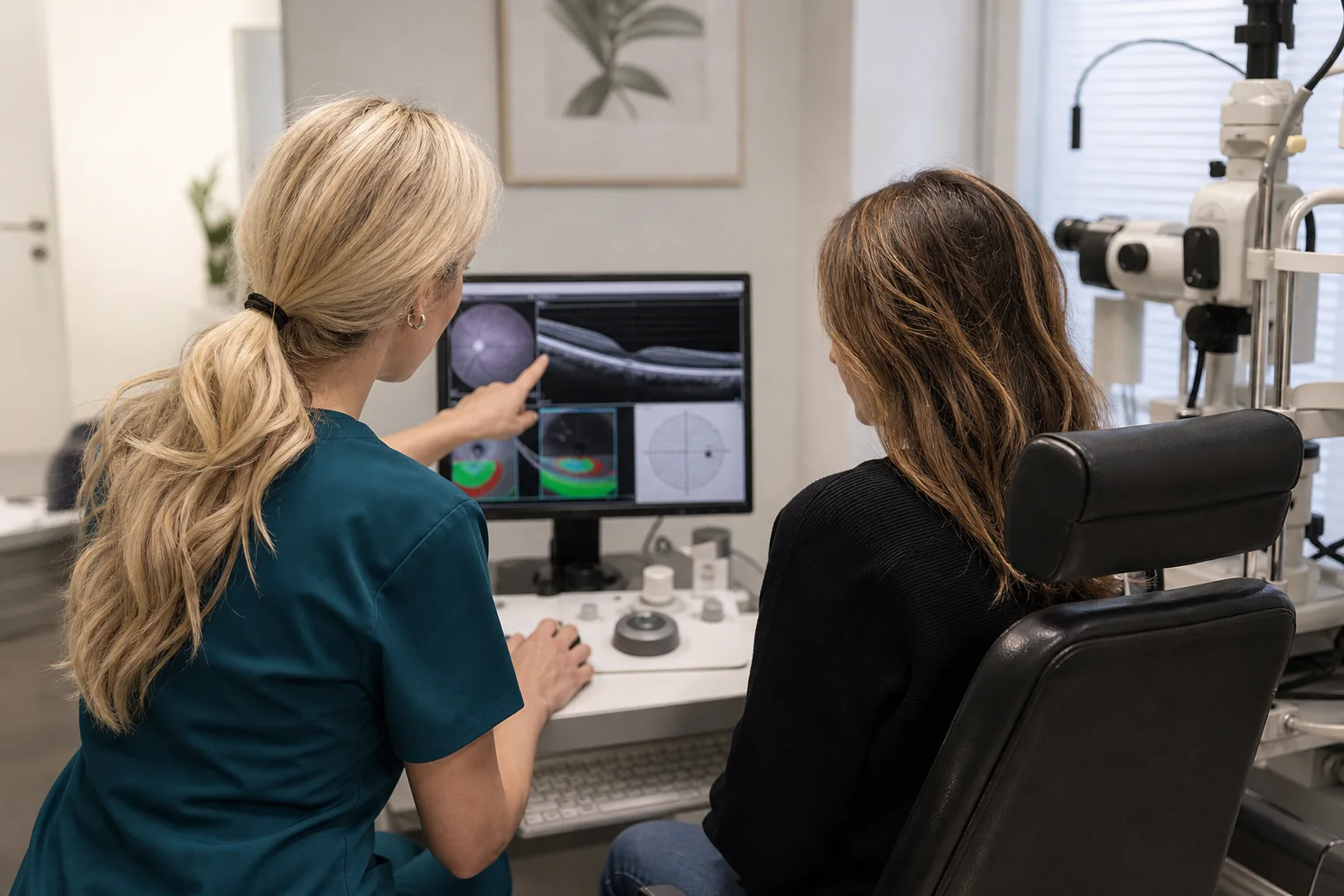
Structure & function
Neuro-ophthalmic assessment
Diagnosis & follow-up
Every finding is interpreted in its neurological context.
Assessment is tailored to the onset, course and associated signs and may require collaboration with a neurologist.
01
Visual acuity & colour vision
Functional comparison between the two eyes.
02
Pupils
Assessment of the reflexes and any asymmetry.
03
Ocular motility
Assessment of eye movements, alignment and the type of double vision.
04
Visual field testing
Mapping of functional defects.
05
Fundus examination & OCT
Assessment of optic nerve morphology.
06
Neuroimaging
MRI, CT or collaboration with other specialties when clinically indicated.
Management
Management follows the cause.
There is no single treatment for double vision or optic nerve conditions. An accurate diagnosis and assessment of urgency come first.
01
Immediate referral
When there are signs of a possible neurological emergency.
02
Targeted treatment of the cause
Determined by the specific ophthalmic or neurological diagnosis.
03
Functional support
May be considered for double vision once the cause has been established.
04
Comparative follow-up
Review of visual function, fields and OCT when indicated.
A possible neurological emergency requires immediate medical attention. Electronic communication is not an appropriate channel for urgent assessment.
Frequently asked questions
Helpful answers.
General information that does not replace an individual medical assessment.
Is double vision a condition?
It is a symptom. Assessment determines whether it is monocular or binocular and identifies the ophthalmic, neurological or other underlying cause.
Is optic disc swelling a diagnosis?
It is a clinical finding with several possible causes and requires further investigation.
When is double vision urgent?
When it is new and sudden, particularly with a severe headache, drooping eyelid, pupil change or neurological symptoms.
Specialist assessment
New double vision or a sudden change in vision?
Arrange a comprehensive neuro-ophthalmic assessment or seek immediate help when urgent symptoms are present.
or call +30 697 421 2356
Medical information notice
This content is provided for general information and does not replace an ophthalmic examination, diagnosis or personalised medical advice.