
Vision & development
Clear vision for every new step.
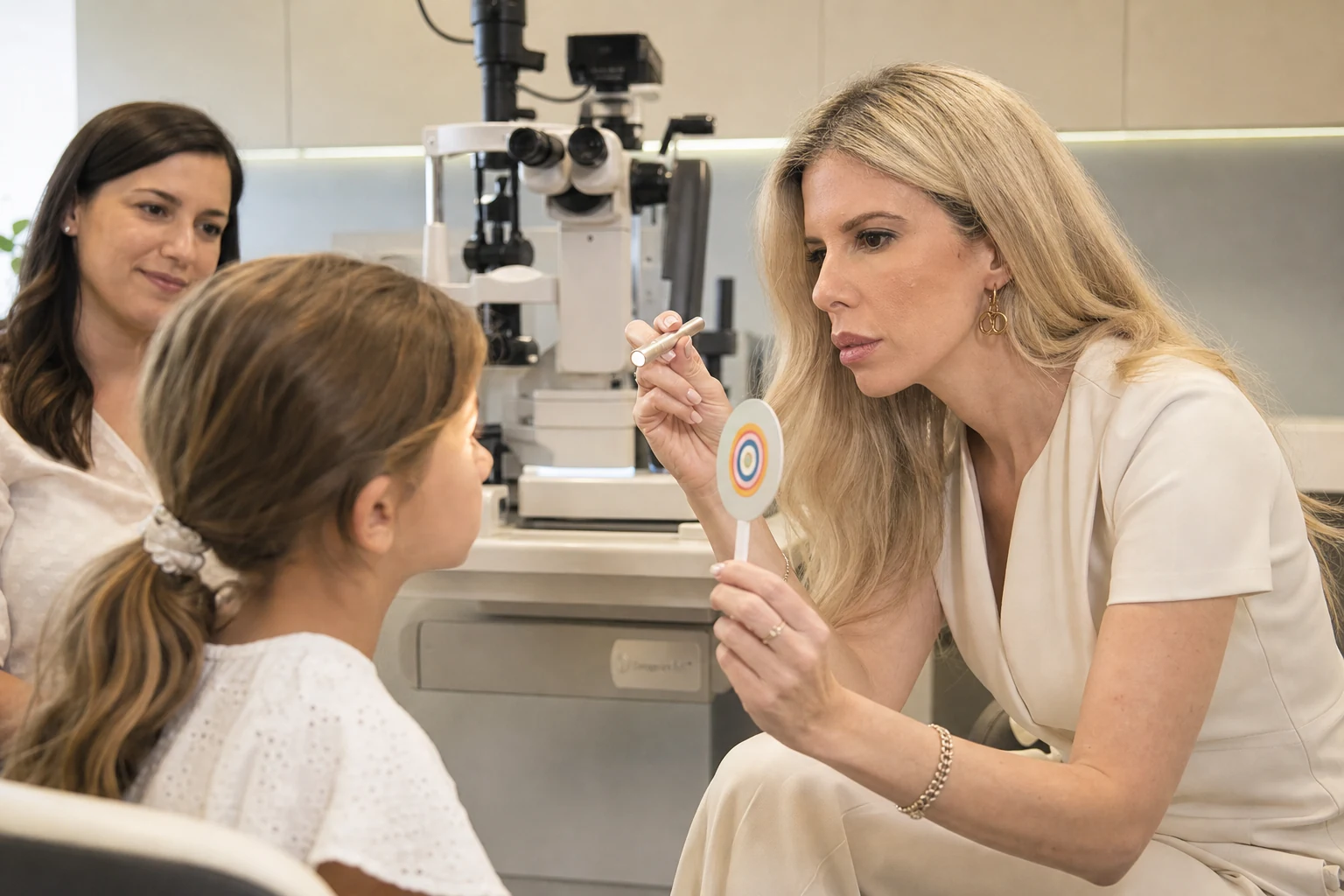
An assessment adapted to each child’s age, level of cooperation and individual needs.
Approach
Child-friendly
Assessment
Age-appropriate
Aim
Early identification
Eye examinations
Paediatric Eye Assessment
Vision in the early years
Visual development deserves timely care.
Some vision problems may not be easily noticed by a child or their parents.
Preventive assessment supports the evaluation of visual development and the identification of conditions that may affect how the eyes function or a child’s daily life at school.
The examination uses pictures, symbols, lights and objective measurements appropriate to the child’s age; children do not need to know letters.
There is no arbitrary examination schedule suitable for every child. The timing and frequency of assessment are determined by the doctor according to the child’s history.
What is assessed
Vision, alignment and visual development.
The assessment is adapted to remain clear, calm and reassuring for the child.
01 / VISION
Age-appropriate
Visual function
Assessment of how the child sees and uses both eyes.
- Visual acuity
- Myopia, hypermetropia and astigmatism
- Amblyopia
- Binocular coordination
02 / MOVEMENT
Coordination
Alignment & ocular structures
Assessment of eye position, movement and the health of ocular structures.
- Strabismus
- Eye movements
- Anterior & posterior segments
- Cycloplegic refraction when required
The process
A calm experience without the feeling of a “test”.
The examination progresses at the child’s pace and according to their ability to cooperate.
01
Discussion
Developmental history, premature birth, medication and family eye history.
02
Play & pictures
Methods using symbols, pictures or lights appropriate to age.
03
Objective assessment
Refraction and examination of ocular structures when indicated.
04
Guidance
Explanation of findings and a personalised follow-up plan.
Preparing parent & child
Bring previous prescriptions or examination reports and explain that the child will look at pictures and lights – there are no right or wrong answers.
When assessment may be needed
Small signs that deserve attention.
Observing everyday behaviour can lead to timely ophthalmic assessment.
01
In everyday life
The child sits very close to books or screens, closes one eye or holds their head in an unusual position.
02
At school
They struggle to see the board or report blurred vision, double vision or headaches.
03
Medical history
Premature birth, developmental history, significant family history or a paediatrician’s recommendation.
School vision screening can identify children who need further assessment, but it does not always replace a comprehensive eye examination.
Frequently asked questions
Before your examination.
Concise answers about the process and preparation.
Can a child who does not know letters be examined?
Yes. Pictures, symbols, behavioural responses and objective measurements are used according to age.
Will eye drops be needed?
Only when indicated. The doctor explains the purpose of cycloplegic refraction and its temporary effects.
When should the examination be repeated?
The doctor determines the frequency individually according to the findings and medical history.
Children’s vision
Do you have questions about your child’s vision?
Arrange a paediatric eye assessment adapted to your child’s age and needs.
or call +30 697 421 2356
Medical information notice
This content is provided for general information and does not replace an ophthalmic examination, diagnosis or personalised medical advice.