
Advanced diagnostic assessment
Eye Examinations & Diagnostic Assessment
Accurate measurements and detailed imaging, always interpreted within a comprehensive clinical assessment.
Aim
Early detection
Assessment
Precise
Follow-up
Personalised
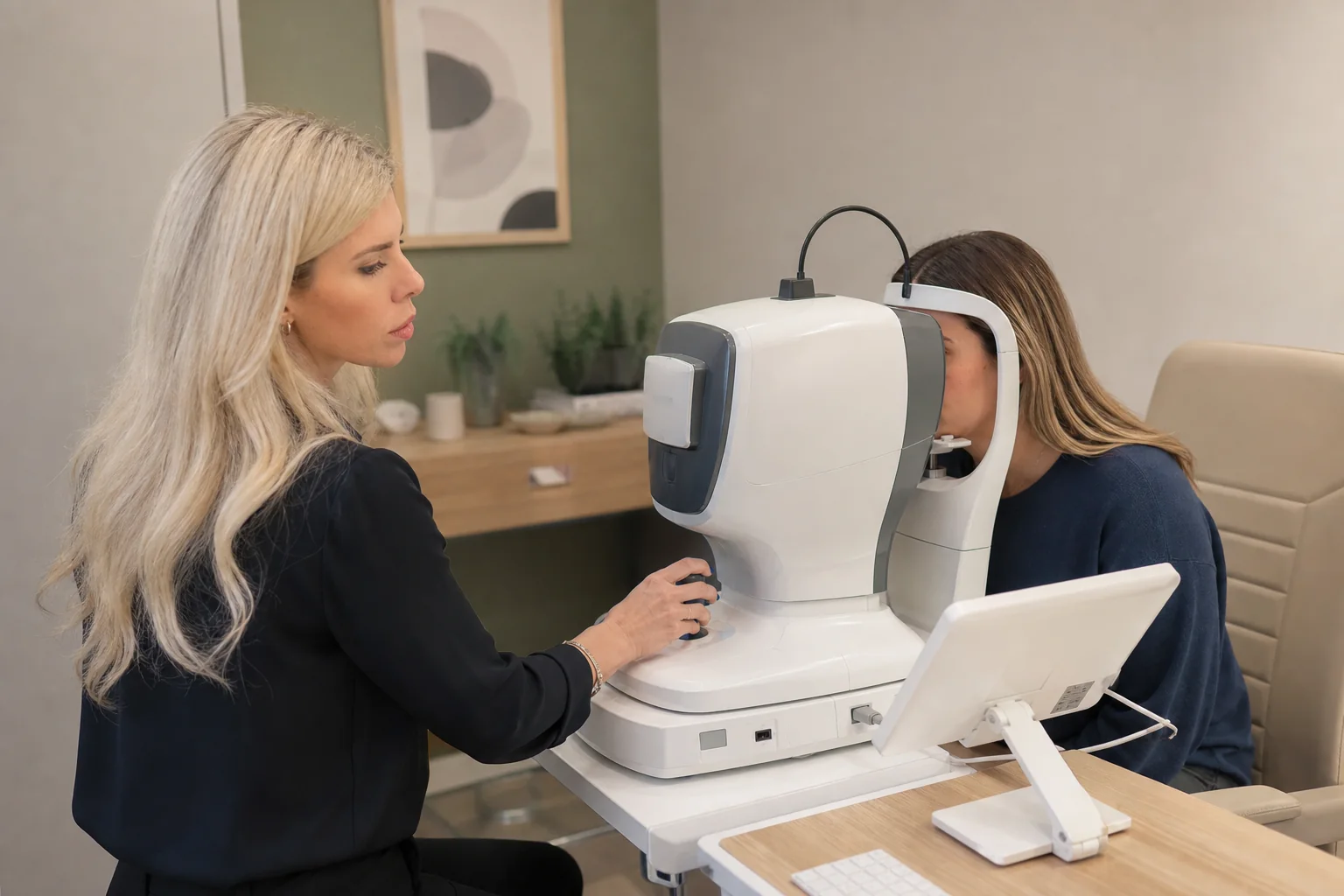
From measurement to interpretation
Diagnostic precision
Comprehensive assessment
The right examination answers a specific clinical question.
The practice provides comprehensive ophthalmic assessment using modern diagnostic equipment, with the aim of early detection, precise evaluation and personalised follow-up of eye conditions.
The type and extent of testing are not the same for everyone. They are determined by age, symptoms, personal and family history, previous examinations and clinical findings.
Technology supports clinical judgement; it does not replace it.
Diagnostic services
Each examination adds a different piece to the clinical picture.
From general and preventive assessment to high-resolution imaging and precise pre-operative planning.
General & preventive assessment
Comprehensive Eye Examination for Adults and Children
A personalised assessment of vision and ocular health for adults and children, tailored to age, symptoms, medical history and clinical findings.
View examinationPreventive Paediatric Eye Assessment
A calm, age-appropriate assessment of visual development, eye alignment, refraction and ocular health for children.
View examinationVisual Acuity and Refraction Assessment
Assessment of distance and near visual acuity, refractive errors and the most appropriate optical correction for each patient.
View examinationIntraocular Pressure Measurement (Tonometry)
Measurement of intraocular pressure, interpreted alongside corneal characteristics, the optic nerve, OCT and visual field findings.
View examinationFundus Examination and Retinal Assessment
Clinical assessment of the retina, macula, optic nerve, retinal vessels and vitreous, with pupil dilation when indicated.
View examinationImaging & functional examinations
Digital Fundus Photography
Digital photographic documentation of the retina and optic nerve to support clinical assessment and comparison over time.
View examinationOCT of the Macula and Optic Nerve
High-resolution, non-invasive OCT imaging of the macula and optic nerve, interpreted alongside the complete clinical picture.
View examinationOCT Angiography (OCTA)
Non-invasive OCT angiography of retinal and choroidal microcirculation, without intravenous contrast dye.
View examinationVisual Field Testing
Functional assessment of central and peripheral vision, with reliability checks and comparison over time when required.
View examinationPre-operative planning
Pre-operative Cataract Assessment – Biometry and Keratometry
Biometry, keratometry and personalised pre-operative assessment for cataract surgery planning and intraocular lens calculation.
View examinationClinical interpretation
Data gain value when interpreted for the individual.
Diagnostic tests complement the clinical examination and are interpreted alongside the medical history and other findings.
An image or an isolated measurement should not be presented as an automatic diagnosis.
Personalised assessment
The appropriate assessment is guided by four factors.
01
Age
Preventive and diagnostic needs change at every stage of life.
02
Symptoms
The duration, severity and pattern of onset guide the assessment.
03
Medical history
Personal and family history, together with previous examinations, provide the clinical context.
04
Clinical findings
The doctor’s examination determines which additional measurement is genuinely useful.
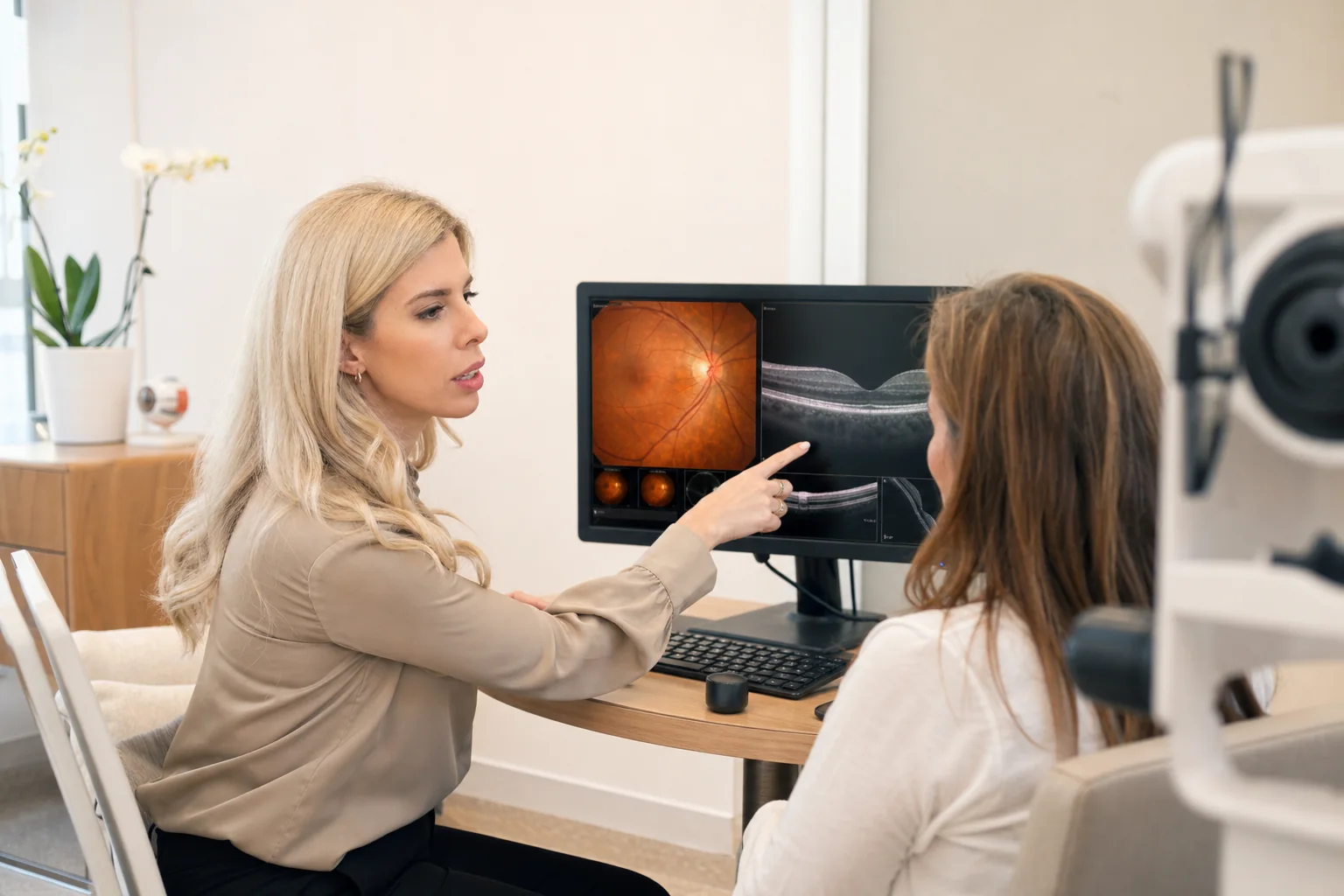
From the image to the decision
Precision without overstatement.
Each result is explained clearly, compared with previous measurements when available and placed within a personalised follow-up plan.
Individual assessment
Not sure which examination you need?
The appropriate assessment is determined after reviewing your symptoms and medical history.
or call +30 697 421 2356
Medical information notice
This content is provided for general information and does not replace an individual diagnosis, clinical examination or the advice of your treating ophthalmologist.