
Pressure & optic nerve
A brief measurement with significant clinical value.
Tonometry measures pressure inside the eye and forms part of a comprehensive glaucoma assessment.
Process
Brief
Measurement
Intraocular pressure
Interpretation
Always combined
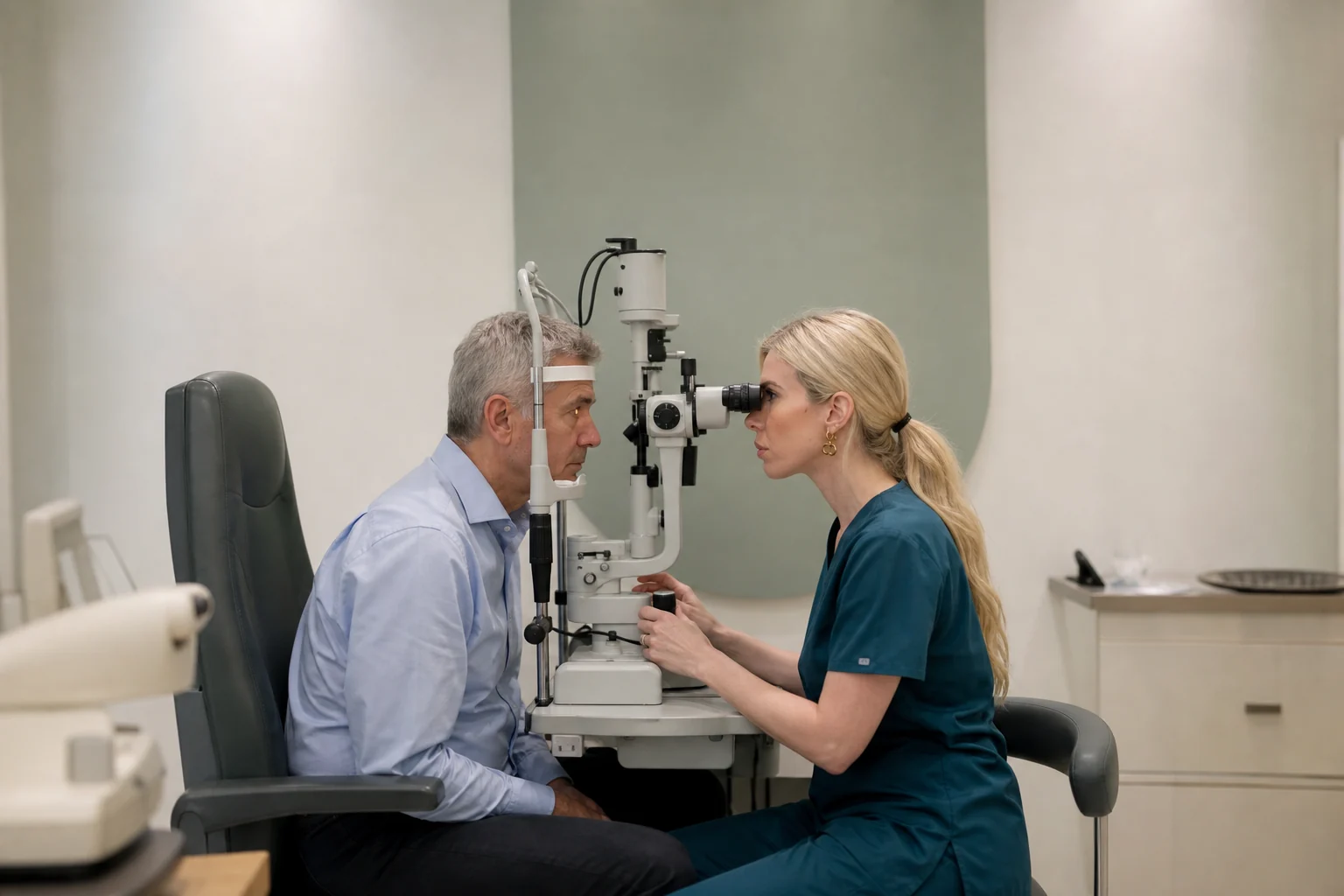
Eye examinations
Tonometry
What is tonometry?
Pressure is one indicator – not the entire diagnosis.
Measuring intraocular pressure is an important part of assessing glaucoma and ocular hypertension.
A single pressure reading is not sufficient on its own to diagnose or exclude glaucoma.
The value is considered alongside the appearance of the optic nerve, OCT, visual fields, medical history and risk factors.
The measurement method is selected according to the available equipment and clinical need. No specific device is assumed.
When it matters
The measurement gains meaning within a comprehensive assessment.
Eye pressure can vary and is interpreted within its clinical context.
01 / RISK
Prevention
Risk factors
It is particularly important when the likelihood of glaucomatous damage is increased.
- Family history
- Suspicious optic nerve appearance
- Medication affecting eye pressure
- Regular eye examinations
02 / COURSE
Follow-up
Known condition
Repeat measurements support follow-up alongside the other findings.
- Glaucoma
- Ocular hypertension
- After treatment
- After selected procedures
The process
A brief measurement, carefully interpreted.
Different techniques may be used according to the individual case.
01
Preparation
The doctor explains the method that will be used.
02
Eye drops
Some contact methods use anaesthetic drops first.
03
Measurement
Pressure is recorded quickly using gentle contact or a non-contact technique.
04
Correlation
The result is assessed alongside the optic nerve, OCT and visual fields.
What affects the reading
Corneal thickness, time of day, fluctuations, medical history and other findings all influence clinical interpretation.
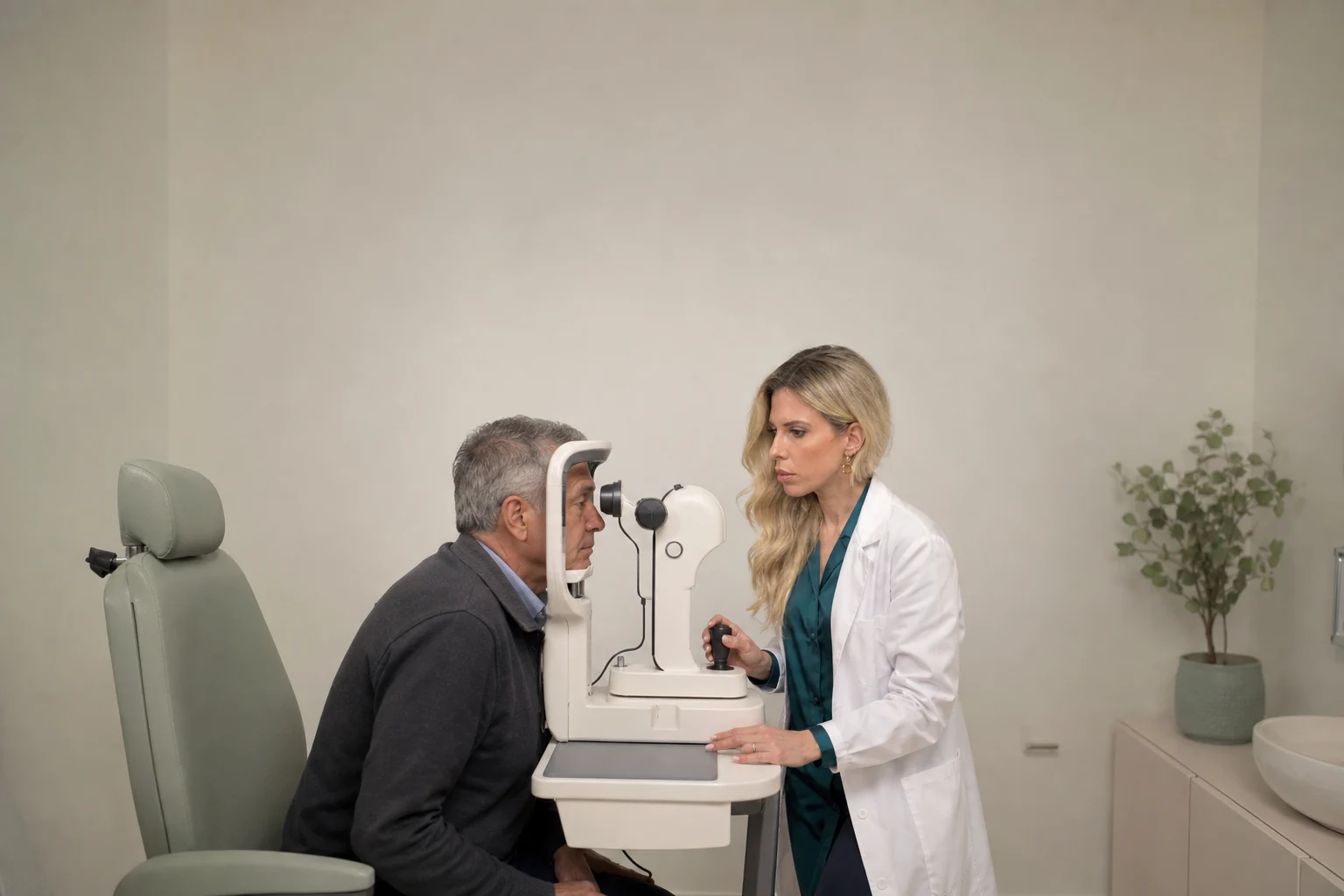
Personalised assessment
Clinical interpretation
Combined diagnosis
The number is not interpreted in isolation.
Careful assessment of pressure prevents premature conclusions and helps establish appropriate follow-up.
01
Cornea
Its thickness and characteristics are taken into account.
02
Optic nerve
The anatomical appearance and OCT complement the measurement.
03
Visual fields
Functional testing helps assess possible damage.
A pressure within the normal range does not necessarily exclude glaucoma, just as an elevated reading is not a diagnosis on its own.
Frequently asked questions
Before your examination.
Concise answers about the process and preparation.
Is tonometry painful?
The examination is brief and usually causes little or no discomfort. Appropriate drops are used before contact methods.
Does normal pressure mean I do not have glaucoma?
Not necessarily. A comprehensive assessment of the optic nerve, visual field and other parameters is required.
Is one measurement enough?
Not always. The doctor may recommend repeat measurements according to the findings and level of risk.
Pressure assessment
Do you need assessment or monitoring of your intraocular pressure?
Arrange a comprehensive assessment for glaucoma and ocular hypertension.
or call +30 697 421 2356
Medical information notice
This content is provided for general information and does not replace an ophthalmic examination, diagnosis or personalised medical advice.