
Personalised surgical planning
Cataract Surgery
Removal of the clouded natural lens and insertion of an intraocular lens, planned around the eye’s measurements and the patient’s individual visual needs.
Starting point
Comprehensive assessment
Planning
IOL selection
Follow-up
Individualised
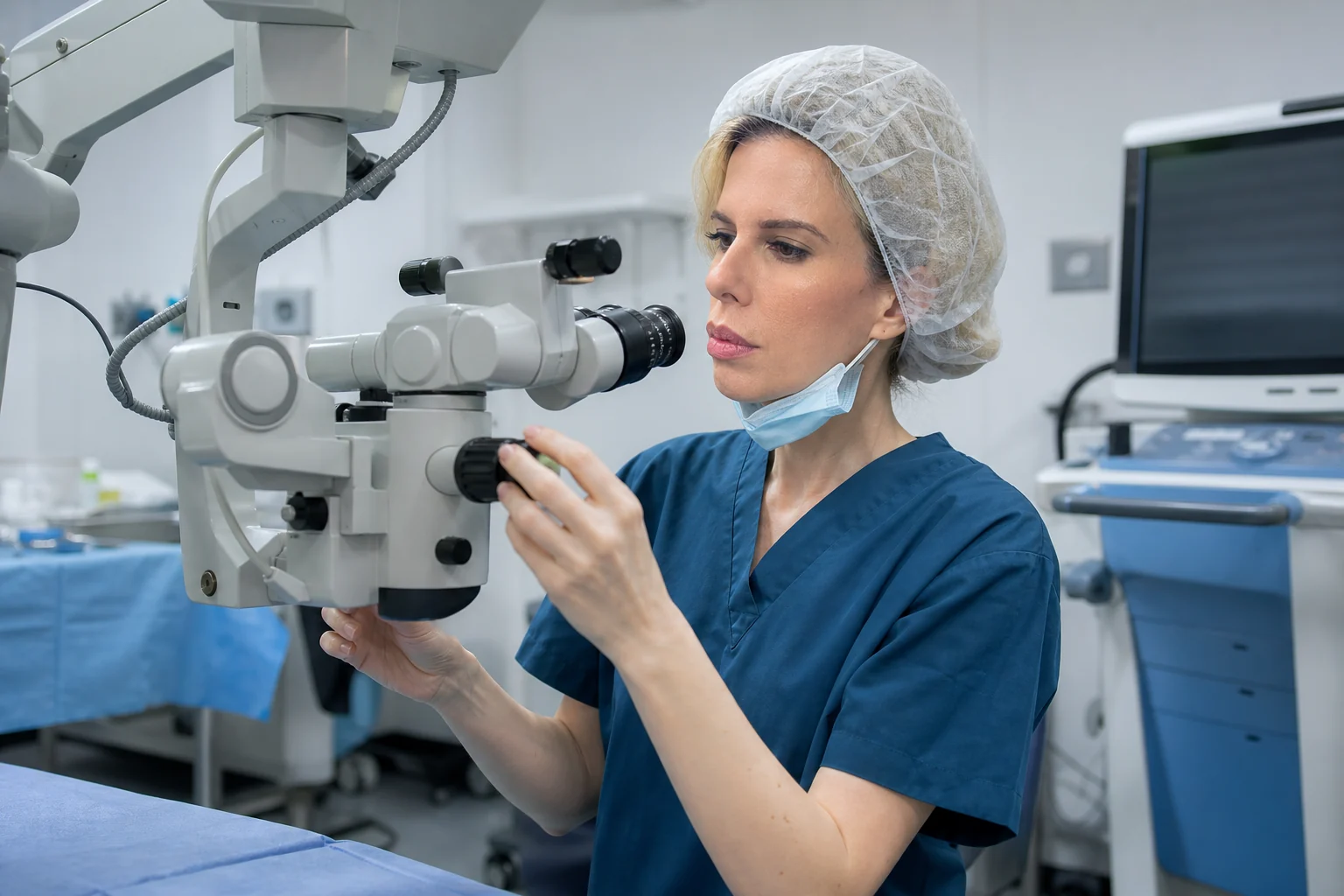
Precision-led planning
Cataract Surgery
The procedure
When lens clouding limits everyday life.
During cataract surgery, the eye’s clouded natural lens is removed and replaced with an artificial intraocular lens.
Surgery is considered when cataract meaningfully affects vision or interferes with activities that matter to the patient. Not every cataract needs to be operated on immediately.
The appropriate timing, surgical technique and type of intraocular lens are decided after a comprehensive assessment and a discussion of the patient’s visual needs.
There is no single option that is right for everyone. The expected benefits, alternatives and possible risks are discussed on an individual basis before surgery.
When surgery is considered
The decision reflects what is limiting your own vision.
The degree of lens clouding is not the only consideration. What matters is its real impact on everyday life and whether there is a medical indication for surgery.
01
Reading & work
Difficulty seeing fine detail or needing more light.
02
Driving at night
Reduced comfort, glare or difficulty in low light.
03
Sensitivity to light
Pronounced glare or haloes around light sources.
04
Reduced contrast
Images appear washed out or less distinct.
05
Frequent prescription changes
Changes in glasses no longer provide satisfactory or stable improvement.
06
Limited activities
Vision affects the things you need or want to do.
The pathway
From assessment to postoperative care.
Each stage supports safe planning and a realistic discussion of the expected outcome.
01
Clinical assessment
A comprehensive examination, cataract assessment and review of the eye’s overall health.
02
Measurements & planning
Biometry, keratometry, intraocular lens power calculation and additional testing when indicated.
03
The procedure
A small incision, removal of the clouded lens using the appropriate technique, and insertion of the selected intraocular lens.
04
Follow-up
Individualised advice, scheduled reviews and assessment of recovery.
The precise technique, type of anaesthetic, duration and surgical setting depend on the individual case and are confirmed during planning. Cataract surgery should not be described as painless or risk-free.
Intraocular lens selection
The right choice starts with your eye.
Not every intraocular lens is suitable for every patient. Selection is guided by the measurements, the health of the eye’s structures and the patient’s lifestyle.
01
Anatomy & measurementsEye length, corneal measurements, the degree of astigmatism, and the health of the macula and optic nerve.
02
Visual prioritiesEveryday needs for distance, intermediate and near vision.
03
Realistic expectationsThe possible need for glasses after surgery is discussed before the final choice is made.
Individualised selection
There is no single “best” intraocular lens for everyone.
Selection follows careful measurements and clinical assessment. Complete freedom from glasses cannot be guaranteed.
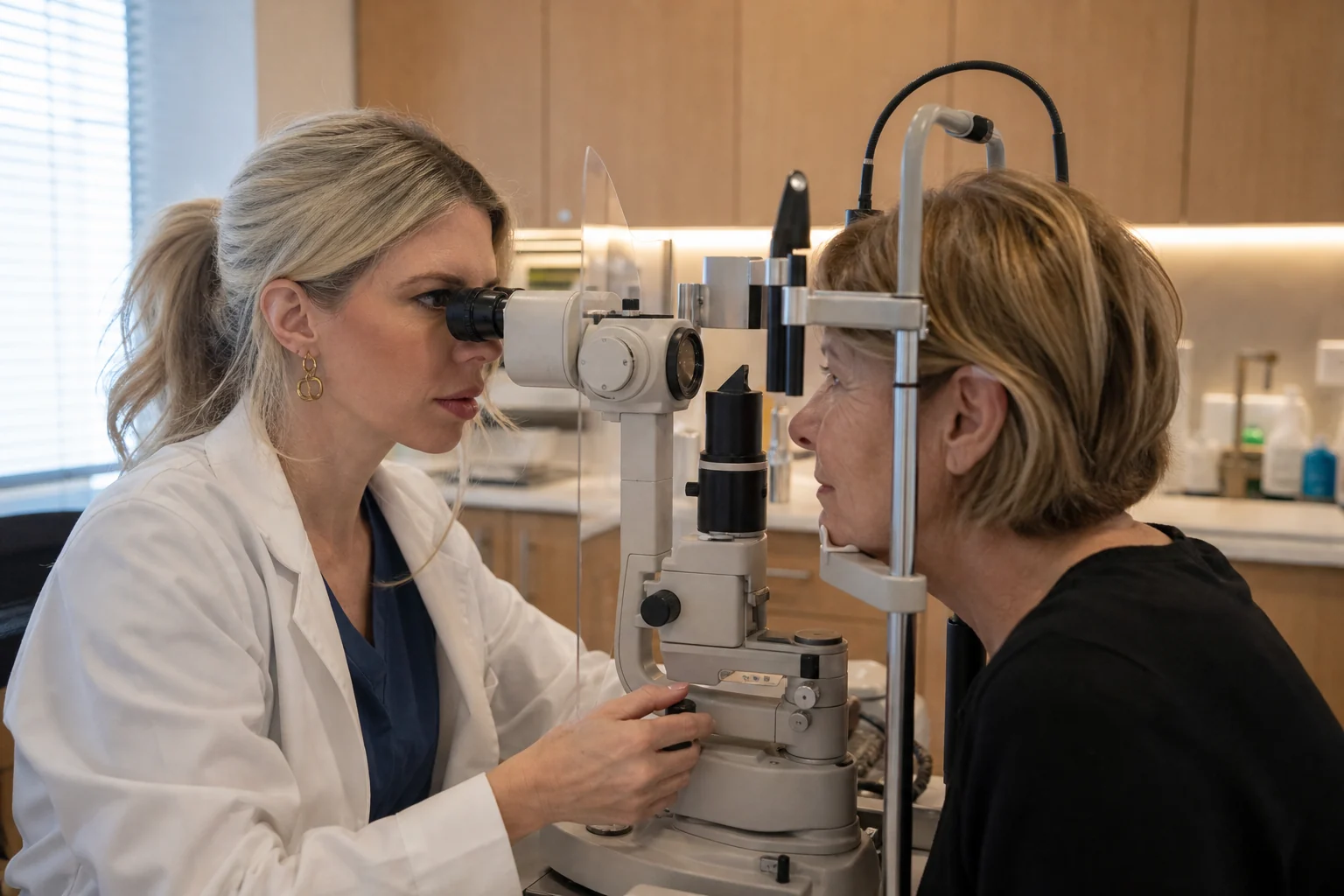
Continuity of care
Scheduled reviews
After surgery
Follow-up is part of the treatment.
Advice on eye drops, protecting the eye and returning to activities is tailored to the individual. Scheduled reviews follow to assess recovery.
01
Instructions
Eye-drop use and any restrictions are defined for the individual case.
02
Reviews
Vision and the condition of the eye are monitored at scheduled appointments.
03
Contact
Any concerning change should be assessed without delay.
Contact the practice promptly Seek prompt advice if you experience a significant reduction in vision, severe or increasing pain, marked redness, many new floaters or flashes of light.
Information & safety
A clear discussion before every decision.
Every surgical procedure carries possible risks. These may include inflammation, infection, changes in eye pressure, swelling, retinal problems, residual refractive error or posterior capsule opacification.
Detailed information, alternative options and the risks specific to each eye are discussed in person before surgery. This website does not replace the process of informed discussion and consent.
Frequently asked questions
Helpful answers.
General information to complement a personal pre-operative discussion.
When will my vision be clear?
Improvement and stabilisation vary according to the individual eye, the type of procedure and any coexisting conditions. The ophthalmologist will explain the expected timescale.
Will I still need glasses?
Glasses may still be needed for certain distances or activities. This depends on the intraocular lens, astigmatism and the health of the eye.
Does every cataract need immediate surgery?
No. Timing is individual and reflects the effect of lens clouding on vision and activities, as well as any medical indication.
What is posterior capsule opacification?
In some patients, the thin capsule behind the intraocular lens can become cloudy over time. This is not the cataract returning and, when indicated, it can be treated with YAG laser.
Pre-operative planning
Is cataract affecting your everyday life?
Arrange a comprehensive pre-operative assessment and an individual discussion about surgery and intraocular lens selection.
or call 697 421 2356
Medical information notice
This content provides general information and does not replace a pre-operative examination, personalised advice or the informed-consent process.