
A clear visual pathway after cataract surgery
YAG Laser for Posterior Capsule Opacification
A short laser procedure that creates a small opening in the cloudy membrane behind the intraocular lens, without a surgical incision.
Cause
Capsule opacification
Intraocular lens
Remains in place
Procedure
No incision
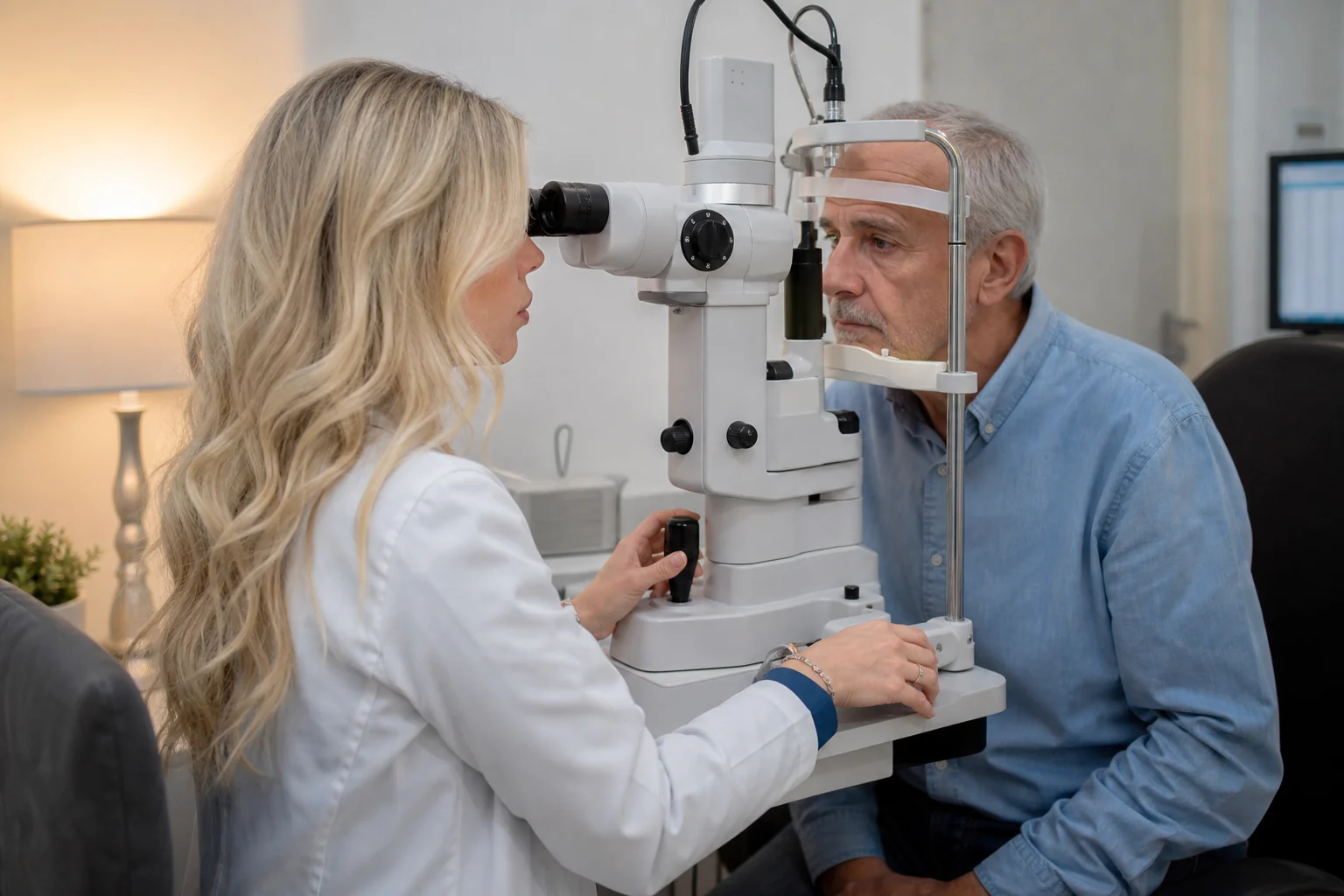
After cataract surgery
YAG Laser Capsulotomy
What it is
This is not the cataract returning — it is clouding of a thin membrane.
After cataract surgery, the artificial intraocular lens remains inside the thin capsular bag that supports it.
In some patients, the posterior part of the capsule gradually becomes cloudy and causes a new reduction in vision.
YAG laser creates a small opening in the cloudy membrane so that light can once again pass towards the retina. The intraocular lens is not removed.
Improvement depends on whether capsule opacification was the principal cause of reduced vision and on the health of the macula, retina and optic nerve.
When it is advised
When clouding noticeably affects vision or limits the examination.
Before treatment, the posterior capsule is confirmed as the likely cause of the symptoms.
01
Gradual clouding
Vision becomes less clear again months or years after cataract surgery.
02
Glare & reflections
Haloes or discomfort around bright light sources.
03
Reduced contrast
Difficulty distinguishing detail when contrast is low.
04
Reading & night driving
Functional difficulty affects particular daily activities.
05
Limited fundus view
Clouding obstructs examination of the back of the eye.
The procedure
Precise assessment and treatment in a few stages.
The laser application usually takes only a few minutes, while the full visit also includes preparation and review.
01
Clinical assessment
Visual acuity, degree of opacification, intraocular-lens position and other possible causes.
02
Dilation & preparation
Dilating drops and local anaesthetic when required.
03
YAG application
The patient sits at the laser and pulses are directed at the cloudy posterior capsule.
04
Review afterwards
Eye pressure may be checked and individual advice provided.
A specialised lens may be placed on the surface of the eye. Bright flashes may be visible during the procedure.
Aim & outcome
A small opening restores the path of light.
The laser opens the cloudy membrane behind the intraocular lens. It does not remove the lens and is not a second cataract operation.
01
The lens remains in placeTreatment concerns the cloudy posterior capsule, not the artificial lens.
02
No surgical incisionThe opening is created with focused laser pulses.
03
Outcome depends on the causeVision improves to the extent that capsule opacification was responsible for the symptoms.
Visual axis
Light once again has a clear pathway to the retina.
Overall visual quality still depends on the health of the macula, retina and optic nerve.
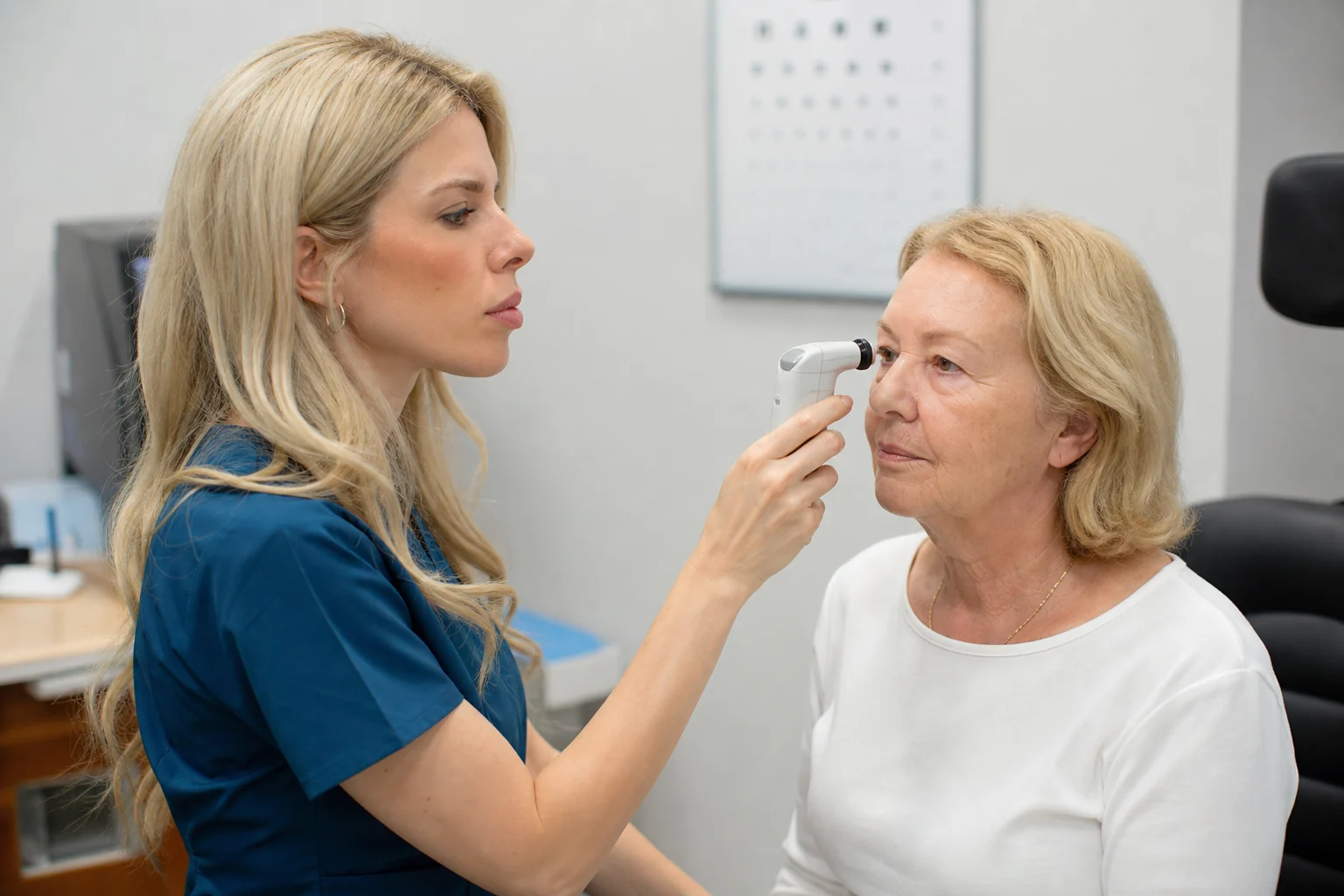
Individual follow-up
Vision & pressure review
After treatment
A short procedure with meaningful follow-up.
Vision may be temporarily blurred by dilation or bright flashes. Some patients notice temporary floaters.
01
Temporary blur
Dilation and bright pulses may affect vision for a short time.
02
Pressure check
This may be performed according to the patient’s history and the clinical protocol.
03
Driving
Follow individual advice and arrange an escort if dilation is planned.
Contact the practice promptly if you experience a significant reduction in vision, severe pain, marked redness, a new shadow, or many new floaters and flashes.
Possible risks
Generally well tolerated, but not without clinical judgement.
The procedure is generally well tolerated but is not free of possible risks. Changes in eye pressure, inflammation, damage to the intraocular lens, macular oedema or retinal complications may be discussed.
The ophthalmologist assesses suitability and discusses the specific risks and expected benefits after a clinical examination.
Frequently asked questions
Helpful answers.
Helpful information about posterior capsule opacification and YAG laser capsulotomy.
Is this a second cataract operation?
No. The intraocular lens is not removed. The laser creates an opening in the cloudy membrane behind it.
Is the procedure painful?
It is generally painless or causes minimal discomfort. The patient may see bright flashes or feel the specialised contact lens.
Is hospital admission required?
It is generally performed as an outpatient procedure without admission.
Can I drive afterwards?
Dilation and temporary blur may affect driving. Follow the ophthalmologist’s individual advice.
Posterior capsule assessment
Has your vision become cloudy again after cataract surgery?
Arrange an examination to determine whether posterior capsule opacification is present.
or call 697 421 2356
Medical information notice
This content provides general information and does not confirm a diagnosis or suitability for YAG laser capsulotomy without an ophthalmic examination.