
Clarity & focus
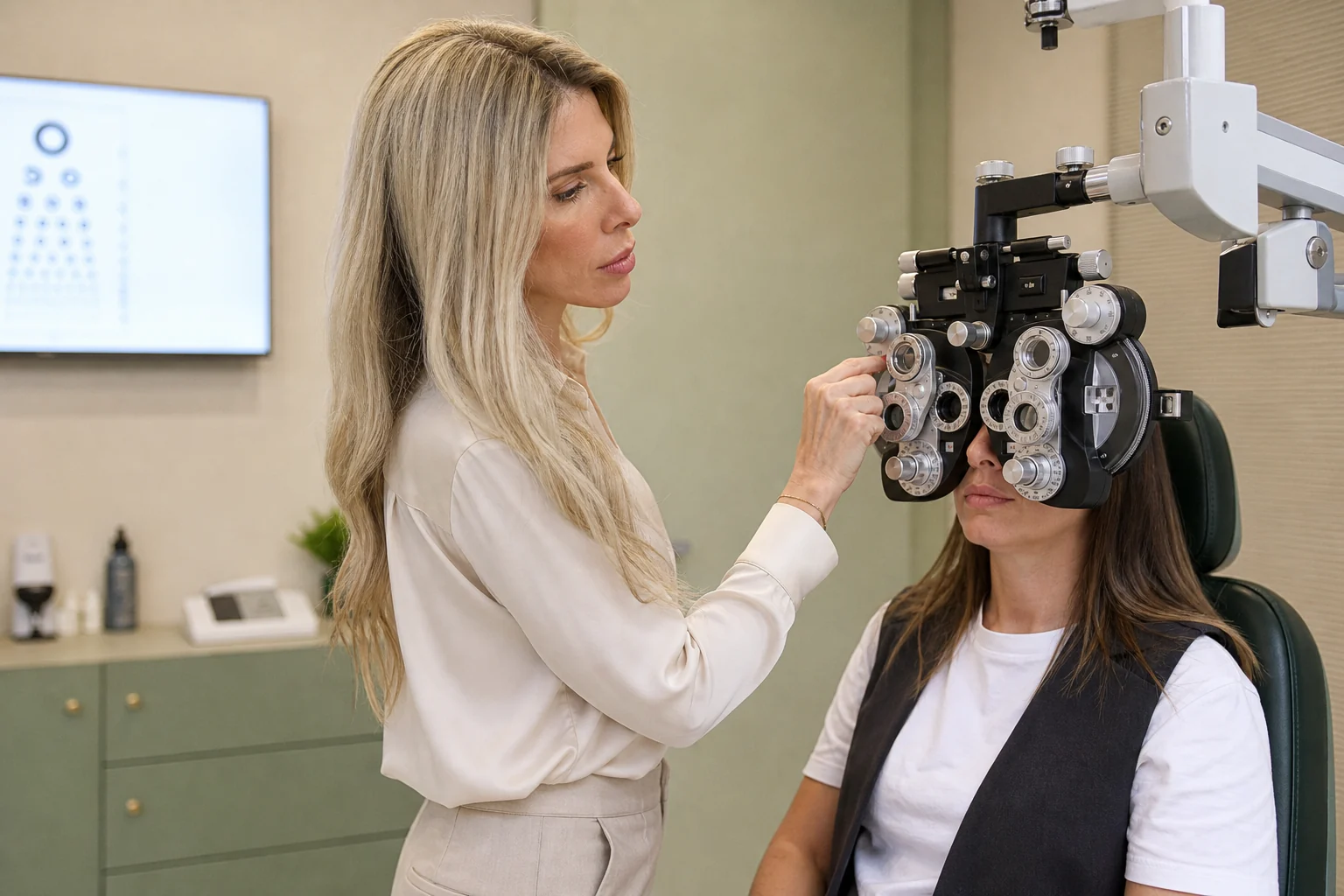
Measuring how clearly each eye sees.
Assessment of distance and near vision to determine the most appropriate optical correction.
Assessment
Each eye separately
Vision
Distance & near
Outcome
Personalised correction
Eye examinations
Visual Acuity & Refraction
Visual Acuity & Refraction
Clear vision has its own measure.
Visual acuity testing assesses how clearly each eye sees at specific distances.
Refraction helps identify myopia, hypermetropia, astigmatism or presbyopia and determines the appropriate optical correction.
Vision measurement is part of a comprehensive eye examination and is not sufficient on its own to assess the health of the eye.
Cycloplegic refraction is used in children or selected cases only when considered necessary.
Refractive errors
Four different ways vision can lose its focus.
The appropriate correction is based on measurements and the patient’s subjective visual experience.
01 / DISTANCE
Myopia & astigmatism
Blur or distortion
Distance vision may be blurred or objects may appear distorted at different distances.
- Myopia
- Astigmatism
- Night vision
- Frequent prescription changes
02 / NEAR
Hypermetropia & presbyopia
Focusing and eye strain
Near work may require more effort or cause eye strain and headaches.
- Hypermetropia
- Presbyopia
- Near work
- Visual fatigue
The process
Objective measurements and personal responses.
The final correction is refined through a combination of techniques.
01
Visual acuity
Measurement of distance and, when required, near vision.
02
Automated measurement
Objective estimation of refraction using appropriate equipment.
03
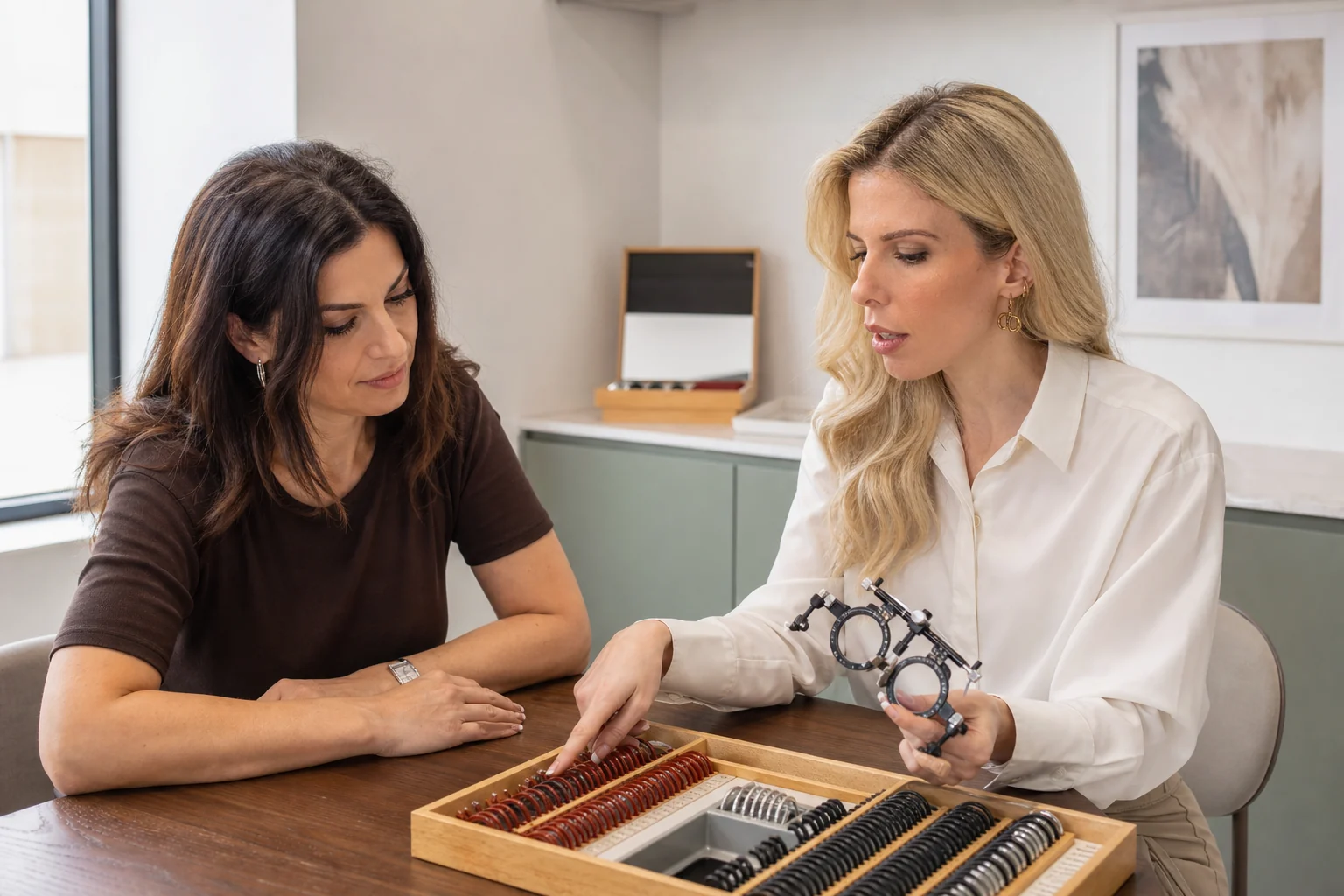
Lens comparison
Comparison of lens options for clearer, more comfortable vision.
04
Interpretation
Correlation with symptoms and the overall health of the eye.
When it is recommended
For blurred vision, frequent prescription changes, eye strain, vision-related headaches, difficulty with night driving or before a relevant procedure.
Personalised assessment
Clinical interpretation
After the assessment
A prescription is part of the wider picture.
The doctor explains whether new optical correction is needed and whether any findings require further examination.
01
Distance vision
Assessment of clarity at distance for each eye and both eyes together.
02
Near vision
Assessment of comfort and focusing ability while reading or working.
03
Optical correction
A personalised recommendation for glasses or contact lenses when indicated.
There is no safe online “prescription calculator”. Results are interpreted by the doctor together with the clinical examination.
Frequently asked questions
Before your examination.
Concise answers about the process and preparation.
Is this the same as a comprehensive eye examination?
No. It measures visual function and refraction but does not assess overall eye health on its own.
Is each eye tested separately?
Yes. Both eyes may then be assessed together when required.
Are eye drops always needed?
No. Cycloplegic drops are used in children or selected cases when the doctor considers them necessary.
Clearer vision
Has your vision changed or do your eyes tire easily?
Arrange a visual acuity and refraction assessment.
or call +30 697 421 2356
Medical information notice
This content is provided for general information and does not replace an ophthalmic examination, diagnosis or personalised medical advice.